Send us a message and one of our specialists pest managers will be in touch
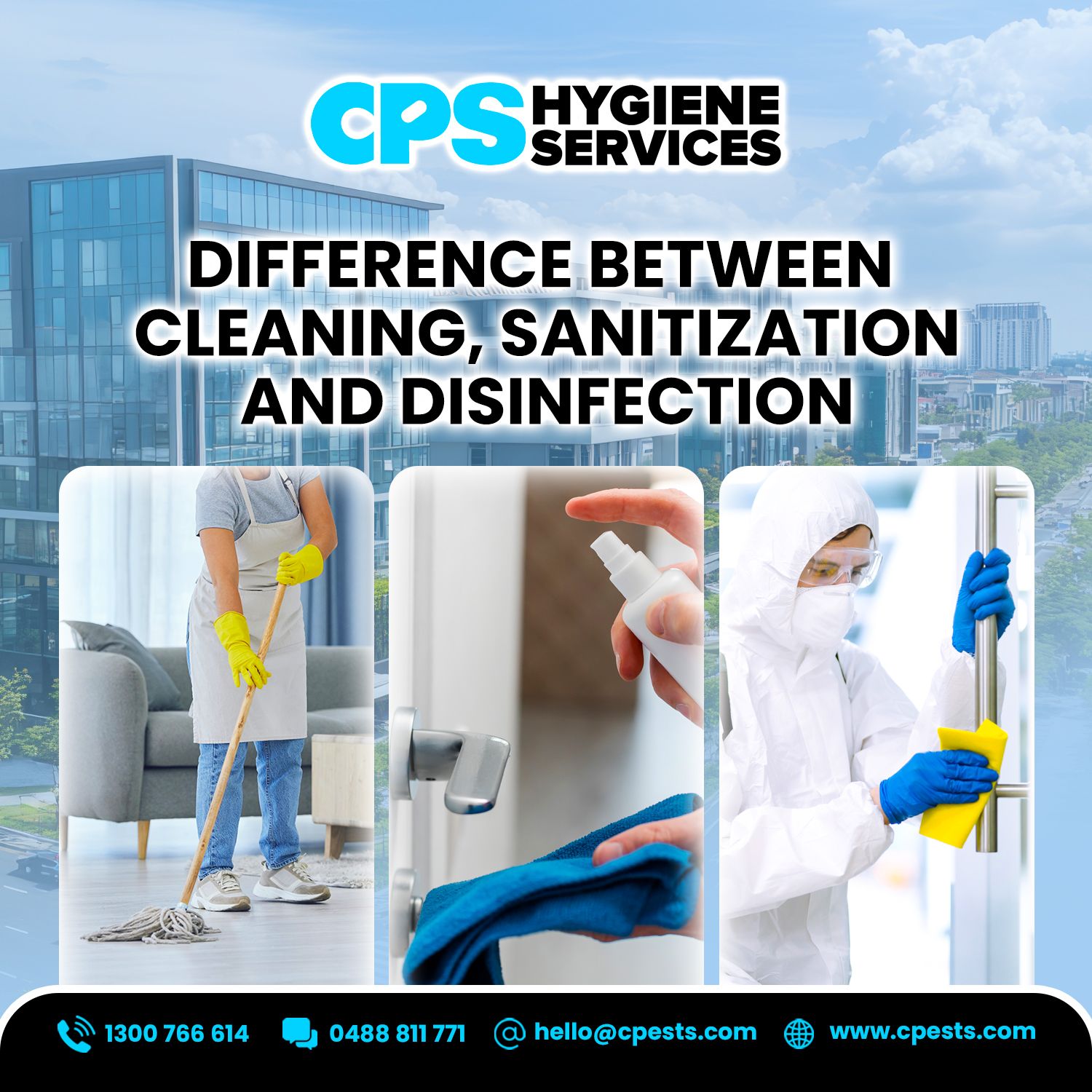
Difference between Cleaning, Sanitization, and Disinfection: Why Commercial Properties Need All Three
June 7, 2026
Cleaning, sanitization, and disinfection are often used interchangeably in workplaces and commercial environments. While they all contribute to a healthier space, they are not the same process. Each step plays a different role in maintaining hygiene, especially in commercial properties where staff, customers, and visitors share common spaces every day. Understanding the difference between these […]
Cleaning, sanitization, and disinfection are often used interchangeably in workplaces and commercial environments. While they all contribute to a healthier space, they are not the same process. Each step plays a different role in maintaining hygiene, especially in commercial properties where staff, customers, and visitors share common spaces every day.
Understanding the difference between these three processes helps businesses create safer, cleaner, and more compliant environments.
What Is Cleaning?
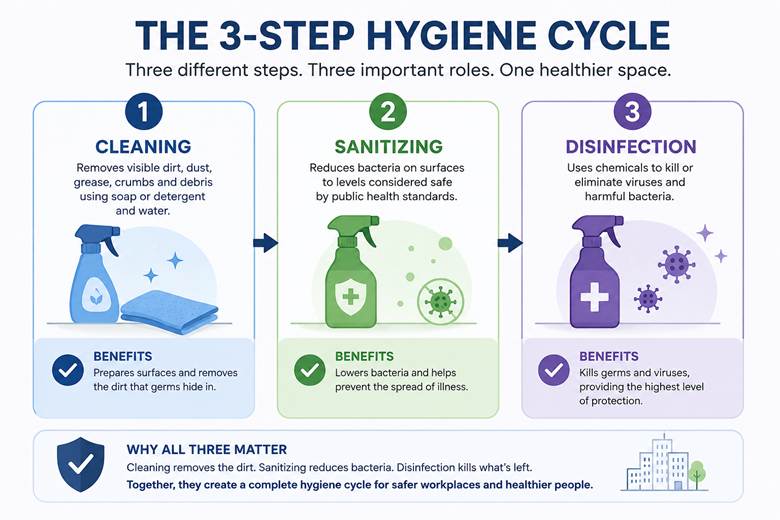
Cleaning is the first and most basic step in the hygiene process. It involves removing visible dirt, grease, crumbs, dust, and debris from surfaces using soap or detergent and water.
While cleaning helps improve the appearance of a space, it does not necessarily kill bacteria or viruses. Instead, it removes contaminants so that sanitizers and disinfectants can work more effectively afterward.
In commercial properties such as offices, retail stores, restaurants, and warehouses, regular cleaning helps prevent dirt build-up and reduces the likelihood of pest activity attracted by food residue and waste.
Benefits of Cleaning
Removes dirt, grease, and debris
Improves workplace appearance
Helps prepare surfaces for sanitizing and disinfection
Reduces dust and allergen build-up
What Is Sanitization?
Sanitization is the process of reducing bacteria on surfaces to levels considered safe according to public health standards and guidelines.
Unlike cleaning, sanitizing specifically targets bacteria. This step is especially important in environments where food preparation or frequent hand contact occurs, such as kitchens, cafés, childcare facilities, and shared office spaces.
Sanitizing is commonly used on benches, tables, touchpoints, and food-contact surfaces after they have been cleaned.
Benefits of Sanitization
Reduces bacteria on surfaces
Supports food and workplace hygiene standards
Helps lower cross-contamination risks
Creates safer shared environments
What Is Disinfection?
Disinfection goes one step further by using chemicals designed to kill or eliminate bacteria and viruses on surfaces.
Disinfectants are commonly used in healthcare facilities, aged care centres, medical clinics, and high-traffic commercial spaces where the risk of illness transmission is higher.
However, disinfectants work best only after surfaces have already been cleaned. Applying disinfectant directly onto dirty surfaces can reduce its effectiveness because grease and debris may block the chemical from reaching harmful microorganisms.
Benefits of Disinfection
Kills viruses and harmful bacteria
Reduces the spread of illness
Supports higher hygiene standards
Essential for high-risk environments
How These Three Steps Work Together
Cleaning, sanitizing, and disinfecting are most effective when used together as part of a complete hygiene cycle.
Think of it as a step-by-step process:
Cleaning removes visible dirt and debris.
Sanitizing reduces bacteria to safer levels.
Disinfecting eliminates harmful germs and viruses.
Skipping one step can reduce the effectiveness of the others. For example, disinfecting a dirty surface may not fully eliminate bacteria or viruses hidden beneath grease or dust.
Commercial properties, especially offices, healthcare facilities, hospitality venues, and retail environments, often require all three steps to maintain hygiene standards and support the wellbeing of both staff and customers.
Why It Matters for Commercial Properties
Healthier work environments
Improved customer confidence
Reduced illness transmission risks
Better Compliance with Hygiene Standards
Supports overall workplace being
A clean-looking space is not always a hygienic one. By understanding the difference between cleaning, sanitization, and disinfection, businesses can create more effective hygiene practices that protect people and maintain professional standards across commercial properties.
Contact CPS today to arrange a professional inspection and tailored treatment plan.
We acknowledge the Traditional Custodians of Country throughout Australia and their connections to land, sea, and community.
We pay our respect to their Elders past and present and extend that respect to all Aboriginal and Torres Strait Islander peoples today.