
Send us a message and one of our specialists pest managers will be in touch

    Do You Know the World’s Deadliest Spiders?

    December 10, 2013
    Top 4 Deadliest Spiders in the World With dangerous spiders causing a media stir when they were found in supermarket bananas in the UK recently, Sky News has cast an eye over some of the world’s most dangerous arachnids. Funnel-webs These dark spiders have fangs that can pierce through human nails. They usually live in […]
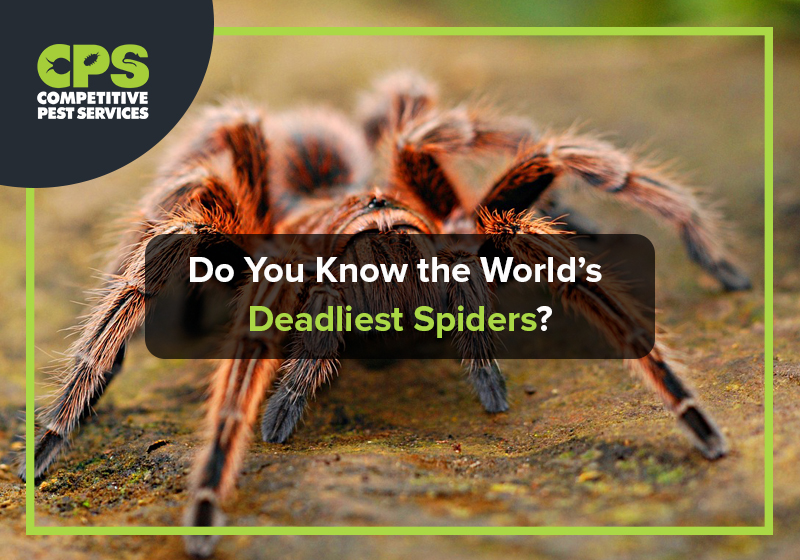
    Do You Know the World’s Deadliest Spiders?

    Top 4 Deadliest Spiders in the World

    With dangerous spiders causing a media stir when they were found in supermarket bananas in the UK recently, Sky News has cast an eye over some of the world’s most dangerous arachnids.

    Funnel-webs

    These dark spiders have fangs that can pierce through human nails.

    They usually live in moist, cool areas such as under rocks or inside logs. They can kill humans although there are effective anti-venoms.

    Brazilian wandering spider

    This aggressive species is so named because it wanders the forest floor at night instead of staying in its web.

    It’s rarely fatal these days thanks to an effective anti-venom and the fact that it doesn’t always inject poison when it bites.

    Black widow

    These spiders are very venomous but won’t attack unless provoked. They feature a striking red mark and can be found in buildings and wood piles arond the US.

    Redback

    This Australian spider is nocturnal and enjoys warm, sheltered conditions.

    Deaths are rare due to an effective anti-venom although many bites have been reported.

    Read more:

    PREVIOUS ARTICLE
    BACK TO ALL ARTICLES
    NEXT ARTICLE

    Contact us for a tailored pest control solution for your home or business

      Get an instant quote
      Or instant answers to your questions
      ASK OUR PEST ASSISTANT
      Acknowledgement logo

      Acknowledgement of Country

      We acknowledge the Traditional Custodians of Country throughout Australia and their connections to land, sea, and community.
      We pay our respect to their Elders past and present and extend that respect to all Aboriginal and Torres Strait Islander peoples today.