Send us a message and one of our specialists pest managers will be in touch
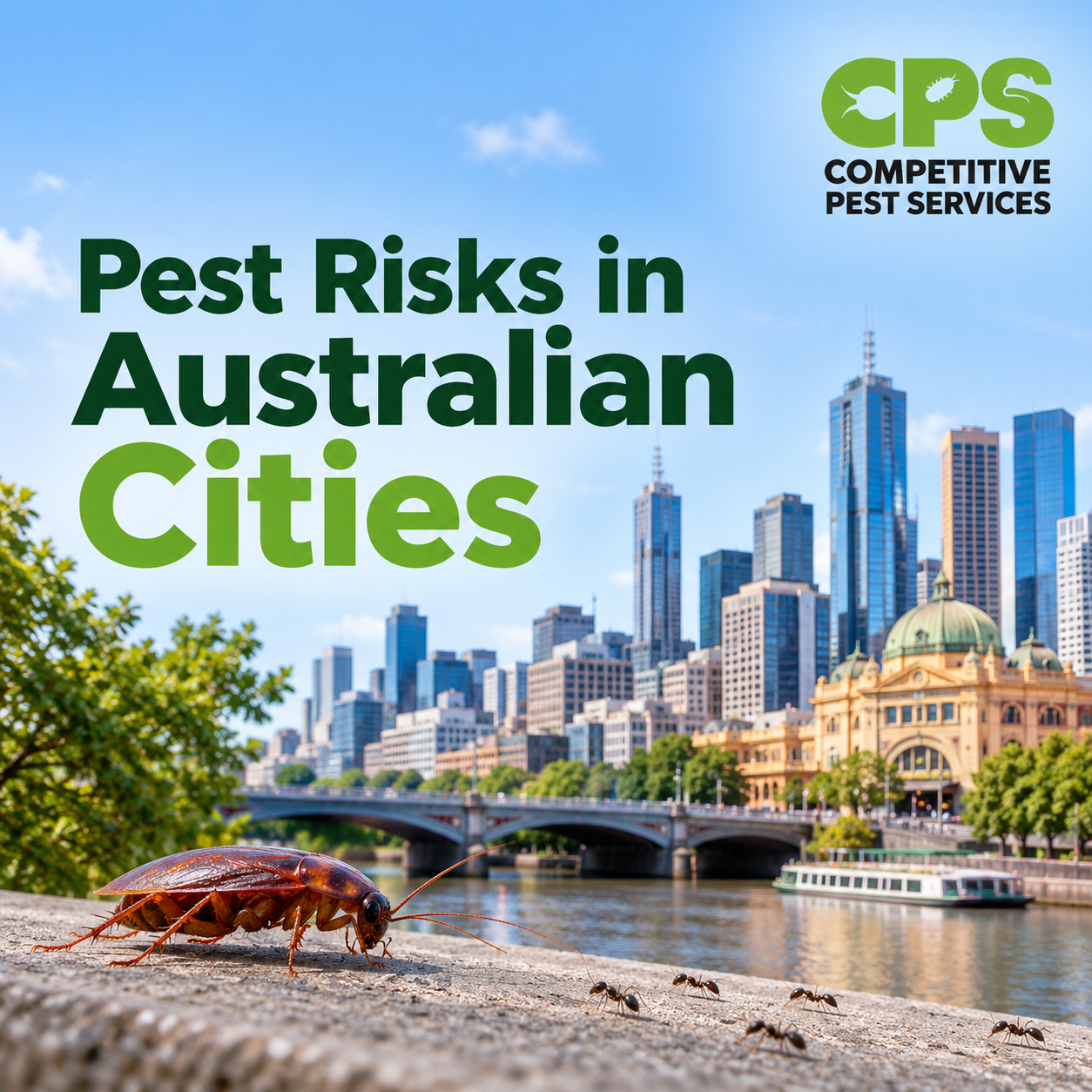
Pest Risks in Australia Cities
November 19, 2026
Australia’s cities provide homes, workplaces, transport networks, restaurants, shopping centres, warehouses, and public spaces for millions of people. However, these busy urban environments also create ideal conditions for many pests. Reliable food supplies, water sources, shelter, waste, and dense buildings allow pests to survive close to people. As Australian cities continue to grow, understanding these […]
Australia’s cities provide homes, workplaces, transport networks, restaurants, shopping centres, warehouses, and public spaces for millions of people. However, these busy urban environments also create ideal conditions for many pests.
Reliable food supplies, water sources, shelter, waste, and dense buildings allow pests to survive close to people. As Australian cities continue to grow, understanding these urban pest risks becomes increasingly important for homeowners, businesses, and property managers.
Why Do Pests Thrive in Urban Areas?
Cities provide many of the resources pests need to survive.
Food waste from homes, restaurants, supermarkets, and commercial kitchens creates reliable feeding opportunities. Buildings provide warm and protected spaces, while drainage systems, gardens, rubbish areas, and leaking infrastructure provide moisture.
Urban development can also reduce natural habitats and change how wildlife and pests move through an area.
Consequently, pests can adapt to city environments and take advantage of opportunities created by human activity.
Common Urban Pest Challenges
Different Australian cities experience different pest pressures, but several pests commonly adapt well to urban environments.
Cockroaches thrive around food, moisture, drains, and warm building spaces. Rodents can use sewer systems, roof voids, wall cavities, and rubbish areas to move between properties.
Ants often enter buildings searching for food and water, while flies gather around waste and food preparation areas.
Birds can also create problems around commercial buildings where food and shelter are readily available.
Density Can Make Pest Problems Harder to Manage
One property does not always operate independently in an urban environment.
Apartment buildings, shopping centres, restaurants, warehouses, and adjoining homes can share walls, drainage systems, service areas, or outdoor spaces. As a result, pests may move between connected areas when conditions allow.
This makes communication and coordinated pest management particularly important for larger properties and multi-site facilities.
Addressing only one visible area may not solve the underlying problem if nearby attractants remain.
Climate and Weather Also Influence Urban Pests
Australia’s climate varies considerably between cities, from tropical conditions in the north to cooler environments in the south.
Rain can increase moisture and encourage insect activity, while hot and dry conditions can push pests indoors in search of water. Seasonal weather changes can therefore influence where pests appear and how active they become.
Urban heat can also create warm environments around buildings, roads, and infrastructure, giving some pests additional opportunities to remain active.
Building More Pest-Resilient Cities
Pests are a natural part of the urban environment, but property owners can reduce the opportunities they provide.
CPS values public health, food safety, property management, as well as Australia ecosystem while taking care of your pest concern.
We acknowledge the Traditional Custodians of Country throughout Australia and their connections to land, sea, and community.
We pay our respect to their Elders past and present and extend that respect to all Aboriginal and Torres Strait Islander peoples today.