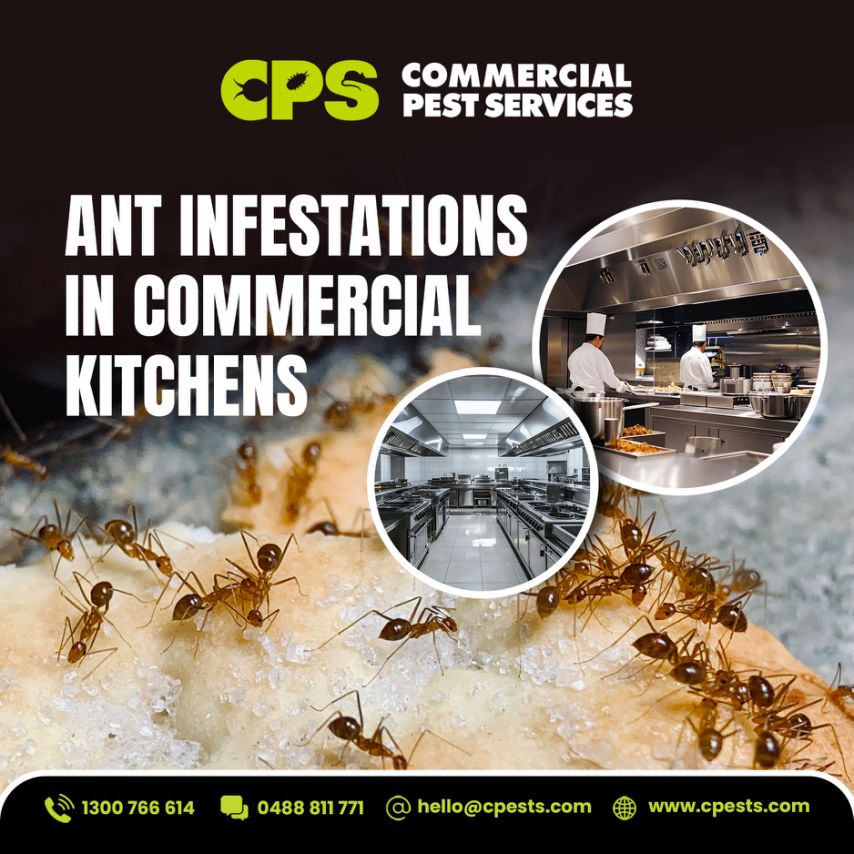
Spotting a trail of ants moving across your kitchen floor might feel like a minor inconvenience. However, in a commercial kitchen, ants are rarely just a nuisance. They are a signal, one that tells you something about your kitchen’s hygiene conditions, food storage practices, and structural integrity. Understanding what ants are actually responding to is the key to fixing the problem properly.
Ants transmit 29+ pathogens on food contact surfaces Failed inspections cost AU food businesses $5,000–$50,000+ 70% of ant issues stem from sanitation failures, not entry points
Why Ants Appear in Commercial Kitchens
Ants don’t enter commercial kitchens by accident. They’re responding to specific conditions that your kitchen is providing. In most cases, three things are at work simultaneously.
Food Residue, Sugar Spills, and Grease Build-Up
Ants are expert foragers and can detect food sources across considerable distances. In a commercial kitchen, the combination of sugary residues from sauces and drinks, grease deposits beneath cooking equipment, and food crumbs in floor joints creates a reliable foraging trail. Once a single scout ant finds a food source, it lays a pheromone trail back to the colony. Within hours, hundreds of workers follow that same route. Cleaning visible surfaces is not enough; ants are finding what cleaning hasn’t reached.
Moisture, Leaks, and Condensation Zones
Beyond food, moisture is one of the strongest attractants for common ant species found in Australian commercial kitchens. Black ants and ghost ants, in particular, seek out damp environments for nesting. A slow-dripping tap under a sink, condensation pooling beneath a refrigeration unit, or a poorly sealed floor drain provides ideal conditions. In fact, a persistent ant problem that doesn’t respond to surface treatment is often a sign of an undetected leak rather than a sanitation failure.
Cracks, Gaps, and Access Points
Ants need a way in. In commercial kitchen environments, the access points are almost always structural: gaps around pipe penetrations through walls and floors, worn door seals on cool rooms and dry stores, cracked grout in tile joints near food preparation areas, and spaces behind built-in equipment where the wall seal has deteriorated. Treating ants without identifying and sealing these entry points means the colony simply redirects. The trail moves, but the infestation continues.
What Ant Activity Tells You About Hygiene
This is the part that matters most for commercial kitchen managers. An ant infestation is not the problem itself; it is evidence of underlying conditions that regulators and auditors will also find. Here’s what ant activity is telling you.
Missed Cleaning in Hard-to-Reach Areas
If ants are active behind your oven, under your dishwasher, or in the corner joins of a prep bench, it is because food residue has accumulated in those spaces. These are areas that standard cleaning routines consistently miss, not because staff aren’t trying, but because the equipment hasn’t been moved and the technique hasn’t been updated. Ants are mapping your cleaning gaps with precision.
Inconsistent Waste Handling
Bin areas are among the highest-risk zones in a commercial kitchen. Organic waste left in bins overnight, bin lids that don’t seal properly, and liquid residue pooling at the base of waste containers all create foraging opportunities. If ant trails are consistently leading toward your waste area, your waste handling schedule or bin management needs to change. Equally, food scraps left in floor grates or drainage covers overnight are a significant ant attractant that many kitchens overlook.
Storage and Food-Handling Weaknesses
Ants entering dry storage areas signal a different problem: inadequate food storage. Dry goods left in their original packaging, cardboard boxes, paper bags, or unsealed bags of rice or flour, are not ant-proof. Ghost ants and black ants can penetrate standard food packaging with ease. Furthermore, any product stored directly on the floor creates both an ant access opportunity and a HACCP compliance issue. Ant activity in storage areas is almost always a sign that food is not stored in sealed, rigid containers.
Hidden Hotspots Where Ants Build Trails
Knowing where to look saves significant time during inspection. In commercial kitchens, ant trails consistently appear in the same locations.
Under Sinks and Dishwashers
The combination of moisture, warmth, and food debris makes the underside of sinks and dishwashers the most common ant nesting site in commercial kitchens. Ghost ants in particular build satellite colonies inside the cavity beneath dishwasher units, where they remain warm and undisturbed. Without removing the kick panel and inspecting the void, this infestation is effectively invisible during a standard clean.
Behind Ovens, Fridges, and Prep Benches
Grease accumulates behind commercial ovens at a rate that surprises most operators. This grease layer, combined with warmth from the cooking equipment, creates near-ideal ant foraging conditions. Similarly, the motor housing of commercial refrigerators generates heat that attracts ant colonies looking for a stable, warm nesting environment. Prep benches fixed directly to walls often develop gaps behind them where food particles and moisture collect undisturbed for months.
Floor Edges, Drains, and Utility Lines
Floor-to-wall junctions are chronically under-cleaned in commercial kitchens, particularly in corners and under fixed equipment. Ant trails running along the base of walls are using these junctions as covered highways; the wall provides shelter from foot traffic and cleaning activity. Floor drains that aren’t cleaned with enzymatic products allow organic matter to build up inside the drain body, creating both a food source and a moisture zone. Utility lines, including electrical conduits, gas lines, and refrigeration pipes, passing through walls are frequent entry points if the penetration isn’t sealed with appropriate material.
Why Ants Become a Compliance Issue
Food Contamination Risk
Ants carry bacteria on their bodies as they move between contaminated surfaces and food contact areas. Research has documented more than 29 species of bacteria associated with ant activity in food environments, including Salmonella, E. coli, and Staphylococcus. Because ants move continuously between floor drains, waste areas, and food preparation surfaces, they act as vectors, transferring pathogens across your kitchen in a way that food handlers may not notice until a contamination event occurs.
COMPLIANCE NOTE Under Food Standard 3.2.2 of the Food Standards Code, food businesses are legally required to maintain premises free from pests and in a condition that prevents pest entry. Ant activity documented during a council or state food safety inspection constitutes a non-compliance finding.
Failed Inspections and Audit Pressure
Council environmental health officers and third-party HACCP auditors treat visible ant activity as an immediate non-compliance finding. Depending on the severity and the number of previous findings, the consequences range from an improvement notice to a temporary closure order. Critically, a pattern of repeated ant findings, even across separate inspections, signals to regulators that the business doesn’t have an effective pest management program in place. That pattern is far more damaging than a single isolated finding.
Reputation Damage for Cafes, Restaurants, and Commercial Kitchens
Ant sightings by customers in a dining or cafe environment have an outsized reputational impact. A single social media post or Google review mentioning ants in a food service area can affect booking volumes immediately. In the age of online reviews, a pest sighting that would previously have been mentioned to a manager is now shared publicly within minutes. For cafes and restaurants operating in competitive areas, the reputational cost of a visible ant infestation far exceeds the cost of professional treatment.
How Pest Technicians Fix the Root Cause
Effective ant control in a commercial kitchen requires a different approach from residential treatment. The goal isn’t just to reduce visible activity, it’s to eliminate the colony and address the conditions that invited it.
Inspection and Species Identification
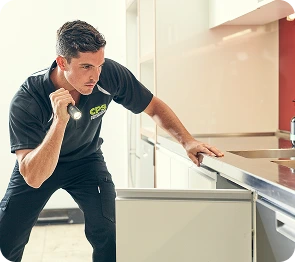
Not all ants respond to the same treatment. Black ants, ghost ants, fire ants, and coastal brown ants each have different nesting behaviours, food preferences, and vulnerabilities. CPS technicians begin every commercial ant job with a thorough inspection, using torches, moisture meters, and thermal cameras where necessary, to identify the species present, locate foraging trails, find nesting sites, and assess the structural access points. This inspection determines the treatment method. Treating ghost ants with the same approach used for black ants produces poor results.
Sanitation and Exclusion
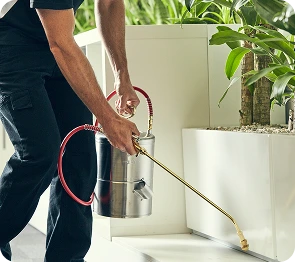
Treatment products are significantly more effective when applied alongside sanitation and exclusion work. CPS technicians identify the specific cleaning gaps and structural access points contributing to the infestation, and provide written recommendations for your kitchen team to address. Gel bait: the most effective treatment for ghost ants and black ants in food service environments, is applied in pea-sized dots at intervals along active foraging trails, behind appliances, and inside voids. Workers carry the bait back to the colony, producing a secondary kill effect that eliminates the population at the source rather than just the visible foragers.
Monitoring and Follow-Up
A single treatment rarely ends a commercial kitchen ant infestation permanently. CPS schedules return visits, typically at two and four weeks post-treatment, to assess population reduction, refresh bait placements, and confirm that the structural issues identified during inspection have been addressed. Every visit generates a timestamped digital service report detailing species confirmed, zones treated, products applied, and hygiene observations. These reports are formatted for direct use in HACCP audit documentation.
Prevention Checklist for Kitchen Managers
The most effective ant prevention program combines consistent cleaning habits, moisture control, and regular structural maintenance. Use the three checklists below as a working reference for your team.
Daily Cleaning Routines
DAILY — BEFORE CLOSE
1. Sweep and mop floor-to-wall junctions, including under fixed equipment
2. Empty all internal bins and replace bin liners — do not leave organic waste overnight
3. Clean floor drains with enzymatic drain cleaner — not just hot water
4. Wipe down the underside of prep benches and the inside of equipment cabinets
5. Remove and clean drain covers — clear any food debris from the drain body
6. Check and clean the area behind and beneath the dishwasher kick panel
Moisture Control and Leak Repair
WEEKLY — MOISTURE AUDIT
☐ Inspect under all sinks for slow drips, pooling water, or condensation
☐ Refrigeration units for condensation overflow or door seal failure
☐ Confirm floor drain covers are sealing correctly — replace cracked or warped covers
☐ Inspect the base of dishwasher, ice machine, and glasswasher for water pooling
☐ Report any tile grout cracking or floor joint gaps to facilities for repair
☐ Check cool room door seals — ant entry through damaged seals is common
Sealing and Maintenance Checklist
MONTHLY — STRUCTURAL CHECK
☐ Inspect all pipe penetrations through walls and floors — seal gaps with steel wool + sealant
☐ Check that all built-in equipment is flush to the wall — remove and re-seal if gaps have developed
☐ Inspect door seals on all cool rooms, dry stores, and service entries
☐ Confirm that all dry goods are stored in sealed, rigid, pest-resistant containers
☐ Ensure nothing is stored directly on the floor — minimum 15cm clearance required
☐ Review your pest management documentation — confirm last CPS service report is on file
Protect your customers, your compliance, and your bottom line.
Is your facility truly audit-ready? Book your free commercial kitchen assessment with CPS today.
#HospitalityManagement #FoodSafety #HACCP #CommercialKitchen #FacilityManagement #PestControlAustralia #QualityAssurance #SydneyB