Send us a message and one of our specialists pest managers will be in touch
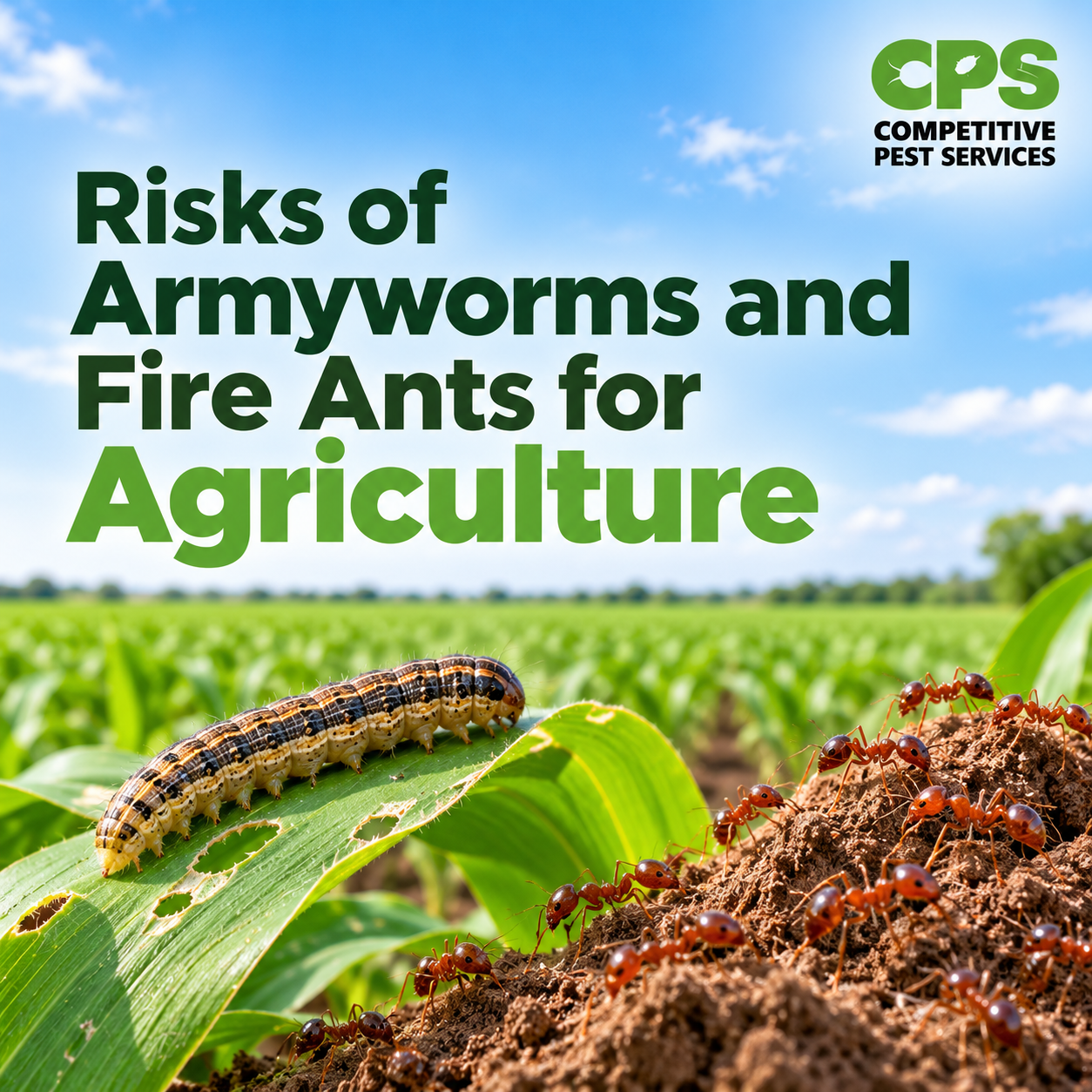
Risks of Armyworms and Fire Ants for Agriculture
November 13, 2026
Australian agriculture faces many pest challenges. Armyworms can damage grasses and crops through rapid feeding, while fire ants can affect agricultural land, livestock, equipment, workers, and farm operations.
Australian agriculture faces many pest challenges, but not every agricultural pest creates the same type of risk.
Armyworms and fire ants are two examples. Armyworms can damage grasses and crops through rapid feeding, while fire ants can affect agricultural land, livestock, equipment, workers, and farm operations.
Although these pests behave very differently, both highlight an important lesson for agricultural properties: early detection matters.
Understanding the risks can help farmers and property managers respond before pest activity becomes harder to manage.
Armyworms Can Damage Crops and Pasture
Armyworms are caterpillars that feed on grasses and other plants.
During favourable conditions, populations can increase quickly. Large groups may move through pastures, turf, and crops while feeding on vegetation.
For agricultural businesses, significant feeding damage can affect plant health, pasture quality, and crop productivity.
Armyworm activity can also develop quickly, making regular monitoring important during periods when conditions favour population growth.
Looking for chewed leaves, damaged grass, and caterpillars around affected areas can help identify activity early.
Fire Ants Create a Different Agricultural Risk
Fire ants present a different challenge because their impacts extend beyond plant damage.
They can form large colonies and aggressively defend their nests. Their stings can affect people and animals, while colonies can interfere with agricultural activities and equipment.
Fire ants can also spread when people accidentally move infested soil, materials, machinery, or other items.
Australia has strict biosecurity requirements surrounding fire ants, particularly in regulated areas.
Therefore, anyone who suspects fire ants should follow the relevant government reporting and movement requirements rather than attempting to move or manage an infestation independently.
Why Early Identification Matters
Armyworms and fire ants require different management approaches.
Misidentifying a pest can lead to ineffective control and allow the problem to continue spreading.
For this reason, agricultural pest management should begin with correct identification and assessment. Farmers should monitor crops, pasture, equipment areas, storage spaces, and property boundaries for unusual pest activity.
Early detection provides more time to determine the appropriate response.
Prevention Supports Agricultural Productivity
Good property management can reduce opportunities for pest problems.
Maintaining clean storage areas, monitoring incoming materials, managing vegetation, checking equipment, and following biosecurity procedures all contribute to better pest prevention.
For fire ants, following official biosecurity guidance remains particularly important because eradication and containment programs depend on coordinated action.
For armyworms, regular crop and pasture monitoring can help identify feeding damage before populations increase significantly.
Professional Support Can Strengthen Monitoring
Agricultural pest management involves more than treating visible pests.
Professional pest control technicians can help identify activity, assess environmental conditions, and recommend suitable management strategies.
We acknowledge the Traditional Custodians of Country throughout Australia and their connections to land, sea, and community.
We pay our respect to their Elders past and present and extend that respect to all Aboriginal and Torres Strait Islander peoples today.