Send us a message and one of our specialists pest managers will be in touch
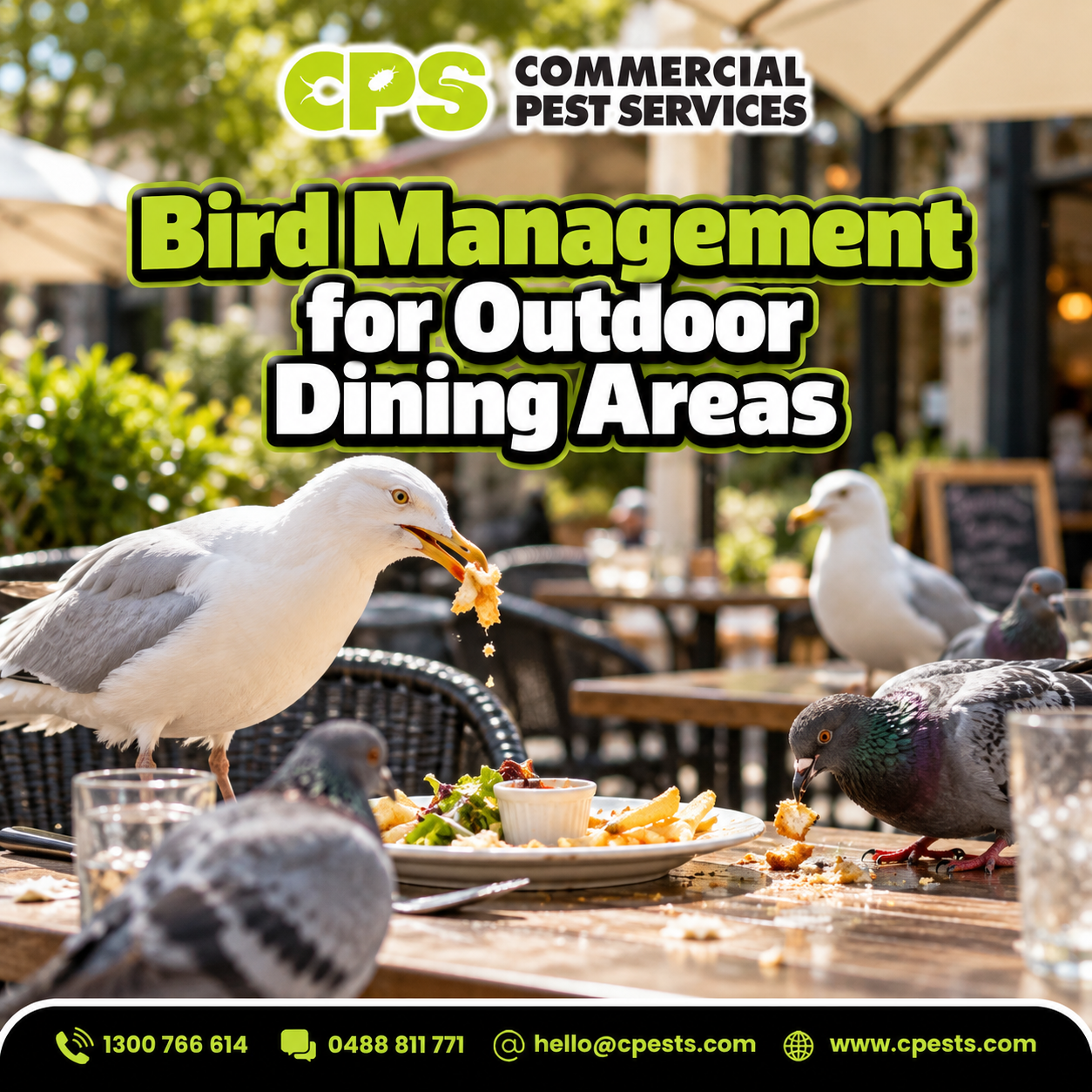
Bird Management for Outdoor Dining Areas
October 7, 2026
Outdoor dining has become a popular part of Australia’s café and restaurant culture. From waterfront cafés to hotel patios and food courts, customers enjoy eating outside whenever the weather is pleasant. However, outdoor dining also attracts unwanted visitors—pest birds. Species such as pigeons, seagulls, sparrows and Indian mynas are quick to recognise places where food […]
Outdoor dining has become a popular part of Australia’s café and restaurant culture. From waterfront cafés to hotel patios and food courts, customers enjoy eating outside whenever the weather is pleasant. However, outdoor dining also attracts unwanted visitors—pest birds.
Species such as pigeons, seagulls, sparrows and Indian mynas are quick to recognise places where food is available. Once they associate a venue with easy meals, they often return repeatedly. Without proper bird management, this can create food safety concerns, property maintenance issues and an unpleasant dining experience.
Fortunately, a proactive approach helps businesses reduce bird activity while keeping outdoor spaces welcoming for customers.
Why Outdoor Dining Naturally Attracts Birds
Outdoor dining areas offer almost everything pest birds need.
Food scraps left on tables, crumbs on the ground, overflowing bins and customers feeding birds all provide reliable food sources. In addition, shaded seating, umbrellas and nearby trees create comfortable places for birds to rest between meals.
Busy hospitality venues often experience constant customer traffic throughout the day. As a result, birds quickly learn that fresh food is regularly available and continue returning.
Without ongoing cleaning and prevention, even a small number of birds can develop into a persistent problem.
Common Pest Birds Around Outdoor Dining Areas
Several bird species commonly visit Australian hospitality venues.
Pigeons
Pigeons are highly adaptable and thrive in urban environments. They frequently gather around shopping centres, cafés and restaurants where food scraps are easy to find.
Seagulls
Seagulls are particularly common around coastal locations, parks and waterfront dining areas. They can become bold enough to snatch food directly from customers, creating both safety concerns and negative dining experiences.
Sparrows
Although small, sparrows often enter outdoor seating areas in search of crumbs and leftovers. Large numbers can quickly become difficult to manage.
Indian Mynas
Indian mynas are an introduced pest species well known for competing with native birds. They readily adapt to commercial areas and frequently gather wherever food waste is available.
Why Bird Management Matters for Hospitality Businesses
Bird activity affects much more than appearance.
Bird droppings can contaminate tables, chairs, umbrellas and surrounding surfaces. Feathers and nesting materials may also affect cleanliness if they accumulate around dining areas.
From a food safety perspective, birds can carry bacteria and other pathogens that may contaminate food preparation or customer dining spaces. For this reason, effective bird management supports broader hygiene programs and complements preventive practices such as HACCP (Hazard Analysis and Critical Control Points).
Customer experience is equally important. Guests expect to enjoy their meals without birds hovering nearby or attempting to steal food. Persistent bird activity may discourage repeat visits and affect online reviews.
Practical Ways to Reduce Bird Activity
Successful bird management focuses on prevention rather than reacting after birds become established.
Clear tables promptly after customers leave and clean food spills as soon as possible. Empty rubbish bins regularly and ensure lids remain securely closed to reduce food availability.
Display polite signs asking customers not to feed birds. Although feeding may seem harmless, it encourages birds to return and increases flock sizes over time.
Businesses should also inspect roofs, signs, gutters and nearby structures for nesting or roosting activity. Early action prevents birds from becoming permanently established around the property.
Where bird activity remains persistent, professional bird management provides tailored solutions. Humane bird-proofing systems, habitat modification and ongoing monitoring help reduce bird pressure while protecting both customers and wildlife.
Prevention Creates Better Dining Experiences
Birds are a natural part of Australia’s environment, but they should not become part of the dining experience.
By combining good housekeeping, effective waste management and proactive bird management, hospitality businesses create cleaner, safer and more comfortable outdoor dining areas. These preventive measures not only support food safety but also protect customer satisfaction, business reputation and long-term operational success.
We are committed to providing services that are effective, transparent, and easy to understand.
Book an inspection now with CPS today to arrange a professional inspection and tailored treatment plan.
We acknowledge the Traditional Custodians of Country throughout Australia and their connections to land, sea, and community.
We pay our respect to their Elders past and present and extend that respect to all Aboriginal and Torres Strait Islander peoples today.