Send us a message and one of our specialists pest managers will be in touch
How To Remove Bees Without Killing
November 27, 2020
The honey bee population is slowly diminishing. If you need to know how to get rid of bees without killing them, the safest options are to have a professional beekeeper remove the hive, use smoke to encourage bees to leave, water your lawn often if ground bees are nesting there, or use natural deterrents such […]
The honey bee population is slowly diminishing. If you need to know how to get rid of bees without killing them, the safest options are to have a professional beekeeper remove the hive, use smoke to encourage bees to leave, water your lawn often if ground bees are nesting there, or use natural deterrents such as mothballs, garlic, cinnamon, and citronella to make them relocate.
These insects are essential pollinators, and bees are important because they help food and crops grow. Farmers often rent beehives to pollinate their crops, and bees also produce the nutrient rich honey that everybody loves. For homeowners and anyone dealing with bees around the house, garden, roof, or yard, that means solving the problem safely matters for both personal protection and the environment, especially if someone nearby is at risk of stings or allergic reactions
This guide explains why bees should be removed carefully, the types of bees you may find in a hive, why swarms happen, and which natural or professional removal methods can clear bees from your property without harming the already dwindling population.
What are Honey Bees?
There are different types of bees in a honey bee hive: Worker, Drone and Queen. Each has its own important roles and performs specific duties in a bee colony. All honeybees are social insects and live together in nests or hives. The honeybee is remarkable for the dancing movements it performs in the hive to communicate information to its fellow bees about the location, distance, size, and quality of a particular food source in the surrounding area.
There are two honeybee sexes, male and female, and two female castes. The two female castes are known as workers, which are females that do not attain sexual maturity, and queens, females that are larger than the workers. The males, or drones, are larger than the workers and are present only in early summer. The workers and queens have stingers, whereas the drones are stingless.
What is a Bee Swarm?
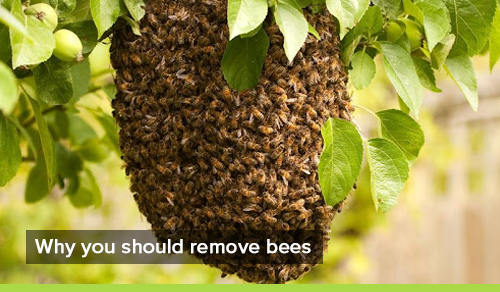
Honey bees swarm for one of two reasons. A bee swarm is usually temporary and can often be left undisturbed unless it poses a safety risk. Swarming is the honey bee’s method of colony reproduction. Either the hive has become too crowded so they split into two groups (or more), with one group remaining in the existing hive. Temporary swarms may also fly around the area while scout bees search for a suitable cavity, and they often move on within 24 to 48 hours if left alone. Or they abscond. In this case, all bees including the queen abandon the existing hive completely due to lack of food or water, parasite or disease infestation, frequent disturbance by humans or animals, weather changes, poor ventilation, or problems with the queen.
Unlike established honey bee colonies, a temporary swarm has not formed an established colony, so it is generally less likely to sting than an occupied hive in a wall or roof cavity. Even so, a colony may contain many bees, and honey bee colonies can grow from 20,000 to over 60,000 in spring.
Why You Should Remove Bees
Some people have severe allergies to bees and could result in them even dying. Most people do not realise they have a bee allergy until they find themselves in the emergency room because of a bee sting. The individuals who are allergic to bees usually get stung by these insects, and when this happens, their skin swells in an extraordinary manner. The swelling does not go away within a few hours or a day as it would for the non-allergic individuals.
If you have a bee nest or hive near your home, the chance of a bee sting greatly increases for you and your family. The risk is even higher when the nest is close to high-traffic areas around the home, yard, or entryways. Some bee stings are worse than others, and sometimes the location of the nest, like in the ground, can increase the chance of multiple bee stings for your children or pets, which may be out playing in the yard.
Even if bees carry out pollination, they also can also destroy the environment for example, if there are carpenter bees, who love building their nests in wood they will attack your wooden house, which may cause many troubles and losses.
What Natural Methods Can be Used?
Make sure to consult with a wildlife professional or beekeeper before dealing with bee problems yourself, and avoid using pesticides as they can harm bees and contaminate honey. This is dangerous, and you need to use protective equipment and other protective gear.
Here are some ways to get rid of bees without killing them:
Call a beekeeper
A local beekeeper can safely relocate a swarm or nest without killing the colony. If you contact a local beekeeper and bees need to be moved, ensure adequate ventilation during transport to prevent overheating so the queen and other bees arrive safely. A beekeeper will get the honeycombs from your house safely while ensuring that the female bee does not get agitated. Beekeepers are preferable to pest exterminators because there is real value to keeping these insects alive. During the removal process, entrances should not be sealed until all the bees have been removed.
Smoke
Smoke is one of the most effective ways in which you can get rid of bees naturally from your property and keep them away. Bees happen to be very sensitive to smell so when they smell smoke, they will think it’s a fire, causing them to leave and more than likely to not come back.
Water your lawn frequently
If you have bees that make their nests in the ground, watering your lawn is among the easiest home remedies to keep bees away. You’ll know you have ground bees if you see little holes in the dry patches in your garden. By watering your lawn once or twice a day, you make the conditions unfavorable for ground bees, and removing attractants eliminates resources that draw them near human areas. Regular watering can also reduce attractants in dry soil and make the area less appealing for nesting near people and pets.
Moth Balls
There are some smells that bees don’t like and mothballs are one of them. To use mothballs, hang them near the bee nest or nests, and eventually, the smell will deter the bees from coming back. You can also hang mothballs in different places around your yard to keep your entire yard bee-free.
Garlic
Due to the strong sense of smell bees have the very strong scent of garlic keeps them at bay. Garlic has a pungent, spicy smell that bees and other insects do not like. Some people also use peppermint plants to keep bees away because of their strong scent. The best way to implement garlic is to make a spray by crushing a couple of cloves of garlic and to mix it with water to create a garlic spray. Spray it around your home and around their hive to try to get them to leave.
Cinnamon
The smell of cinnamon will send the bees searching for another place to relocate. Just sprinkle cinnamon around their hive every day for about a week. These smells will also help prevent bees from coming back.
Citronella
Citronella is another smell that bees dislike. Citronella can’t kill the honey bees, but the smell will irritate them. Burning citronella sticks or using essence under their hive for several days may help irritate the bees into relocating without killing them. But this method is mostly only effective for an indoor beehive as it will go out with rain or wind.
Below are a couple more ways to remove bees, but could result in killing them, so we would not recommend unless absolutely necessary:
Vinegar
Vinegar spray is another way to get rid of bees because its strong odor can repel them, but it may also kill bees, so it is not the best method if you want to keep them alive. Just mix equal amounts of water and vinegar in a spray bottle, shake and spray the mixture on the nest when the bees are sleeping, at night, as well as around plants and flowers where you tend to see a lot of bees.
Soda
As bees love sweet liquid, this method involves cutting a soda bottle or can in half and filling it with a very sweet soda to make a trap for unwanted bees, then placing it in an area where you have noticed a lot of bees. The bees will be attracted to the soda and come to drink it. This method is environmentally friendly but will kill the bees as they will eventually drown in the soda.
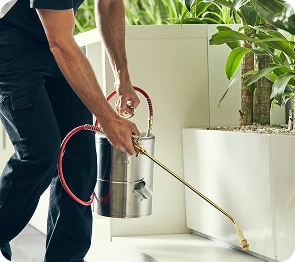
Call a Professional Pest Control
If these home remedy methods give you no joy, it is worth looking into charities that will help relocate the hive or contacting pest control professionals with the necessary knowledge; when removing honey bees from a house, pest control companies may use approved techniques, especially for an established honey bee nest in wall voids or another inaccessible location.
Professionals removing honey bees from structures may also need access methods to reach established hives safely, and they can distinguish bees from other pests such as wasps. After removal, the property owner should have any cavities cleaned completely and cracks inspected and sealed to stop scout bees from entering and finding potential nesting sites as part of sensible preventive measures.
Let us help keep you safe, call us for your pest removal needs today – phone 1300 766 614
We acknowledge the Traditional Custodians of Country throughout Australia and their connections to land, sea, and community.
We pay our respect to their Elders past and present and extend that respect to all Aboriginal and Torres Strait Islander peoples today.