Send us a message and one of our specialists pest managers will be in touch
Pantry Moths: Why Do They Keep Coming Back?
August 11, 2026
You throw away the affected flour, wipe down the pantry shelves, and think the problem is over. Yet, a few weeks later, you spot another moth flying around your kitchen. If this sounds familiar, you are not alone. Many homeowners become frustrated when pantry moths return after they believe they have solved the problem. However, […]
You throw away the affected flour, wipe down the pantry shelves, and think the problem is over. Yet, a few weeks later, you spot another moth flying around your kitchen.
If this sounds familiar, you are not alone.
Many homeowners become frustrated when pantry moths return after they believe they have solved the problem. However, recurring pantry moth infestations often happen because the source of the problem remains hidden.
The good news is that understanding why pantry moths keep coming back can help you take the right steps towards effective pantry moth control.
What Are Pantry Moths?
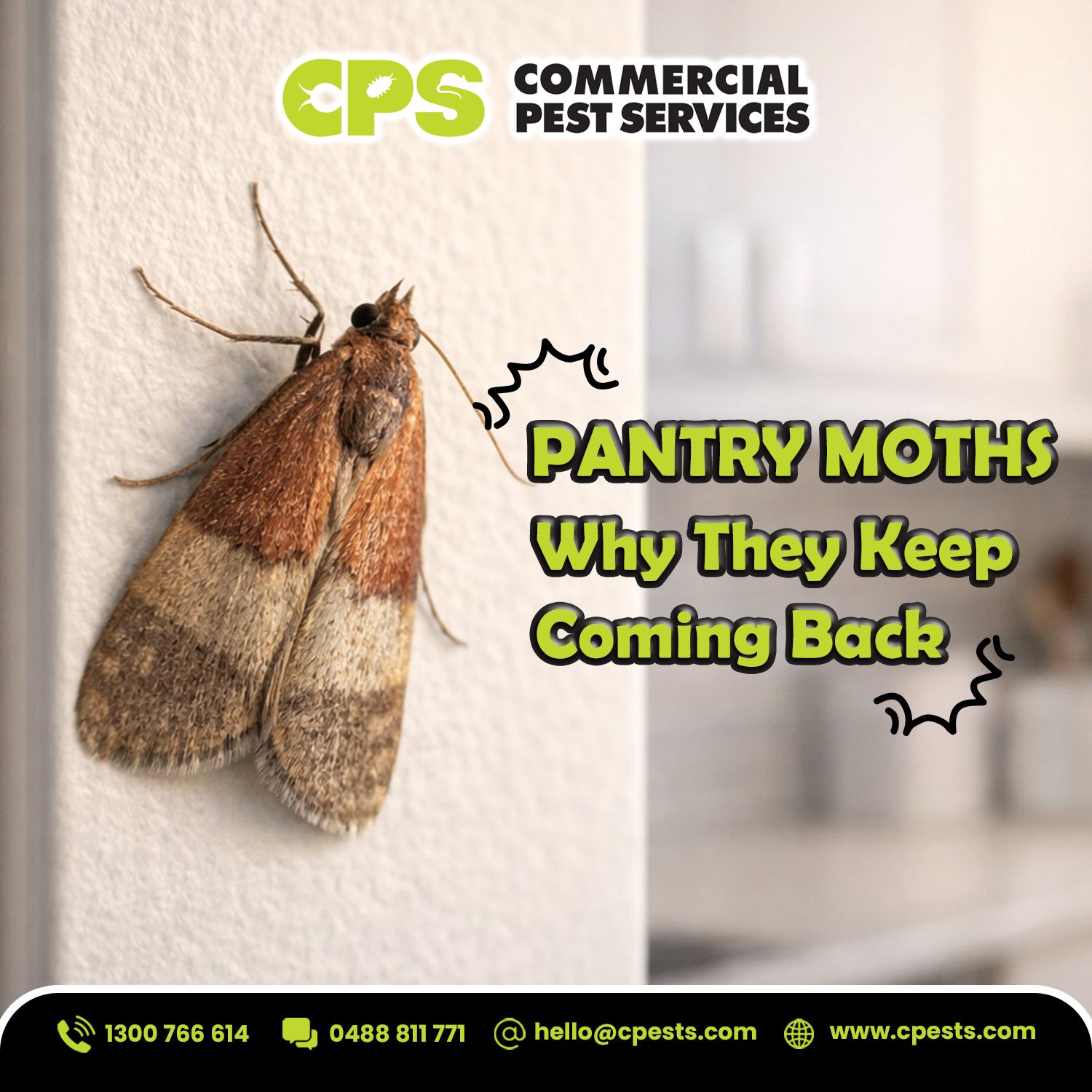
Pantry moths are one of the most common stored product pests found in homes.
The most common species is the Indian meal moth. Adult moths are small and often noticed flying around kitchens and food storage areas.
However, the adult moths are usually not the main problem.
The larvae cause the most concern because they feed on stored food products and contaminate them with silk webbing and waste.
Common foods affected by pantry moths include:
Flour
Rice
Cereals
Pasta
Nuts
Dried fruit
Seeds
Pet food
Because these products are pantry staples, pantry moth infestations can affect almost any household.
Why Do Pantry Moths Keep Coming Back?
Eggs Hidden Inside Food Packaging
One of the most common reasons for recurring infestations is that pantry moth eggs may already be present inside packaged food before it enters your home.
The packaging often looks perfectly normal.
As a result, homeowners may unknowingly introduce pantry moths while unpacking groceries.
Forgotten Food Sources
Sometimes, a single overlooked food item allows the infestation to continue.
Open bags of flour, forgotten cereal boxes, baking ingredients, bird seed, and pet food can all provide food sources for pantry moth larvae.
Even a small amount of infested food can restart the cycle.
Missed Cleaning Areas
Pantry moth larvae can hide in small spaces.
Crumbs trapped in shelf corners, food residue beneath containers, and spills behind pantry items may support ongoing activity.
Without thorough cleaning, eggs and larvae can remain unnoticed.
DIY Treatments Only Target Adult Moths
Many people focus on eliminating the flying moths they can see.
Unfortunately, adult moths represent only part of the infestation.
Eggs and larvae often remain hidden inside food products or cracks around storage areas.
Therefore, removing visible moths alone rarely solves the problem completely.
How to Help Prevent Pantry Moths
Fortunately, a few simple habits can reduce future risks.
Inspect dry goods before storing them.
Transfer pantry staples into airtight containers.
Rotate older food items regularly.
Vacuum pantry shelves and corners often.
Wipe shelves after spills immediately.
Store pet food in sealed containers.
Avoid keeping expired food products.
These steps support pantry moth prevention and improve overall kitchen hygiene.
When Should You Seek Professional Help?
If pantry moths continue appearing despite your efforts, professional assistance may be worthwhile.
Repeated infestations often indicate hidden food sources or overlooked areas that require further investigation.
Professional pest technicians can help identify contributing factors and recommend appropriate pantry moth control solutions tailored to your situation.
They do not necessarily reflect poor housekeeping habits. In many cases, the problem begins long before the groceries arrive in your pantry.
The key lies in identifying the source, maintaining good storage practices, and acting early when signs appear.
If you are wondering how to get rid of pantry moths for good, professional guidance can help break the cycle and restore confidence in your kitchen once again.
We are committed to providing services that are effective, transparent, and easy to understand.
Book an inspection now with CPS today to arrange a professional inspection and tailored treatment plan.
We acknowledge the Traditional Custodians of Country throughout Australia and their connections to land, sea, and community.
We pay our respect to their Elders past and present and extend that respect to all Aboriginal and Torres Strait Islander peoples today.