What are fleas?
Fleas
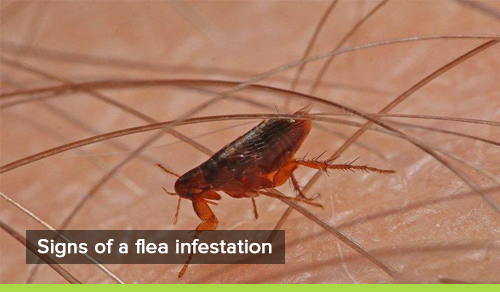
are tiny dark brown external parasites that depend upon a host animal for their survival. Once fleas find your pet, the adult fleas will reproduce and thrive on your pet, and in your home, until you break their lifecycle. Fleas persist due to so many pets living indoors, providing an ideal climate for year-round breeding of this insect pest. Many species can infest more than one host species.
During their life cycle fleas pass through four stages–egg, larva, pupa and adult. Although they can jump, adult fleas do not usually travel long distances without a host. Fleas prefer to wait and jump onto a passing animal. Once aboard, they remain until they are dislodged or groomed from the animal. Without a host, adult fleas can survive only a few days to 2 weeks. On short-haired cats and dogs fleas survive an average of 8 days; they live longer on long-haired animals.
Fleas need a blood meal to survive. Their favorite hosts around the house and yard are dogs, cats, squirrels and other warm blooded mammals. If people are being bitten by fleas in a house where pets are present then a very high population is present. For every six fleas seen, there are 300 adult fleas actually present. If animals are not present, fleas will opt to hop onto humans. They thrive best in indoor climates. In these conditions, a flea life cycle is around 18 to 21 days. If the weather isn’t ideal and there isn’t a host to feed on, flea larvae may remain dormant for months while waiting for better conditions to develop. On average, an adult flea lives from several weeks to several months.
The female flea begins laying eggs within 2 days of her first blood meal. Four to 9 days later she produces an average of 27 eggs per day, consuming about 15 times her body weight in blood daily.
On average, fleas are 2.5 millimeters long, making them visible to the naked eye. Their strong legs allow them to jump as far as 13 inches in distance.
Signs of a flea infestation
Dogs and cats that are allergic to the protein in flea saliva, will itch or scratch as soon as a flea bites their skin. A single flea bite can cause pets to scratch excessively and become agitated.
As well as itching, red pimples or bumps on your pet’s groin, belly, under the legs, or at the base of their tail may be a sign that your pet has fleas. Hair loss and dry skin due to scratching may also be a sign of fleas on dogs or cats.
You also want to know how to recognize flea larvae or eggs on your dog. Flea eggs are about the size of a grain of salt, oval-shaped, and off-white.2 They’re tough to spot, so you might only see them in bedding. Flea larvae, which hatch from flea eggs, look like very tiny, off-white worms.
Leaving fleas untreated can lead to lesions and infection, or even develop into more severe diseases.

Preventing Fleas on Your Pet
- Prevent and get rid of fleas by regularly using flea treatment for your pets. See your vet for advice on the best flea products that work for your pet.
- Limit the amount of time your pet spends outdoors.
- Limit contact with wild and stray animals.
- Bathe and brush pets regularly.
- Check for fleas regularly.
How to treat and get rid of fleas
Effective treatment options to prevent or eliminate fleas are available from your vet and include powders, sprays, shampoos, and topical liquids. Your vet may prescribe creams and antibiotics in severe cases.
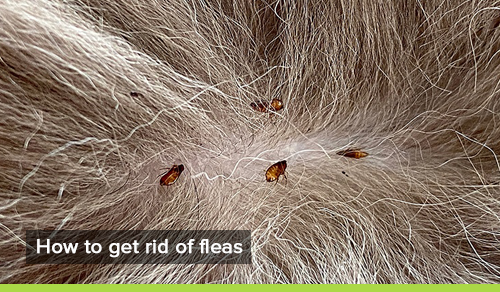
Thoroughly bathe pets with soap and water, then comb them with a flea comb. Pay careful attention to face and neck regions, and the area in front of the tail. Have a bowl of soapy water handy to dunk the critters once you comb them out of your pet’s hair. Soap will act as a gentle insecticide to kill adult fleas. Talk to your veterinarian about choosing the right flea control product for your pet. Also wash your pet’s bedding in hot water every couple of days. Dry it on the highest heat setting after each washing.
Thoroughly and regularly clean areas where you find an adult flea, flea larvae, and flea eggs. Vacuum floors, rugs, carpets, upholstered furniture, and crevices around baseboards and cabinets daily or every other day to remove flea eggs, larvae, and adults. Vacuuming is very effective in killing larvae in the carpet, picking up adults, and stimulating pre emerged adults to leave their cocoons.
Make sure your dog doesn’t pick up fleas in the yard and bring them back inside. Mow your lawn regularly and rake the exposed surfaces thoroughly. Fleas like to hide in tall grass. Remove all debris, such as dead leaves and twigs, from flower beds and from under any bushes. Expose as much of the shady areas to sunlight as you can.

Why Prevention Is So Important
Once a flea finds a home on your pet, it feeds, then lays up to several hundred eggs in a few days. Ten adult females can produce nearly 10,000 flea eggs in just 30 days. Eggs and larvae can be found in the grass and soil of your yard. Fleas can hitch a ride on your dog and into your home, where their eggs fall onto the carpet and furniture. The eggs lay dormant for weeks before they emerge as adults.

Call a professional
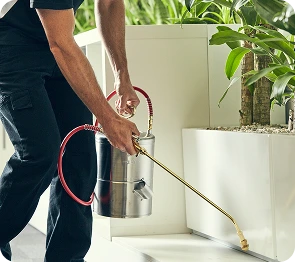
If your home is still heavily infested with fleas then it’s time to call a professional. Competitive Pest Services can help you determine the best course of action for getting rid of flea infestations in your home and garden. Call us at 1300 766 614 for more information.