It’s almost impossible to keep all pests from entering your home but there are several things that can keep them away from the house. Here are some steps you can take to pest proof your home:

Seal doors, windows, and any openings
Install door sweeps or thresholds at the base of all exterior entry doors. Gaps of 1/16″ or smaller can allow insects and spiders inside, and spaces as small as ¼” are large enough for mice. Windows are the most common entry points for flying insects in particular. Check to see if there are any rips or tears in your window screens, and make sure that the screens fit tightly into the frame. Repair gaps and tears in screens; the smaller the screen mesh, the harder it is for pests to enter. Add weather stripping or door-seal kits to the perimeter of the frame to keep insects from entering along the sides or top of the door or window.
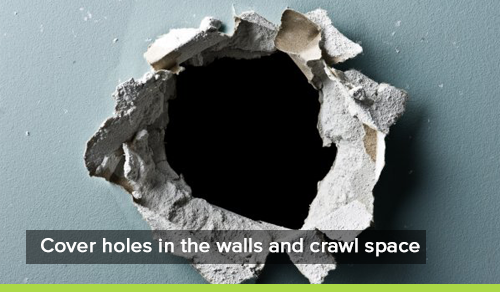
Cover holes in the walls and crawl space
Many insects, including outdoor cockroaches and ants, can invade your home and set up residence in your walls.
Holes in the wall can form as the foundation begins to settle, creating cracks in the brick and sheetrock that are large enough for an entire family of birds to nest in. One of the most vulnerable areas is the holes where appliances are plugged in, especially in water lines behind the refrigerator and washing machine.
Look for large holes on the roof, which are often found at the chimney and roof vents. Wire mesh should also be installed over holes in crawl spaces, basements, and vents. Invest in a chimney cap to exclude birds, squirrels, raccoons, and other nuisance wildlife.
Crawl spaces are common entry points and nesting grounds for thousands of rodent and insect pests because they are rarely cleaned and maintained. Seal up all possible entry points. Everything from the space between your AC pipes and the wall to the smallest crack on the roof can be an entry point for an invasive insect species.
Seal utility openings where pipes and wires enter the foundation and siding, e.g., around outdoor faucets, receptacles, gas meters, clothes dryer vents, and telephone/cable TV wires. These are common entry points for such pests like rodents, ants, spiders and yellowjackets. Holes can be plugged with caulk, cement, urethane expandable foam, steel wool, copper mesh, or other suitable sealants.
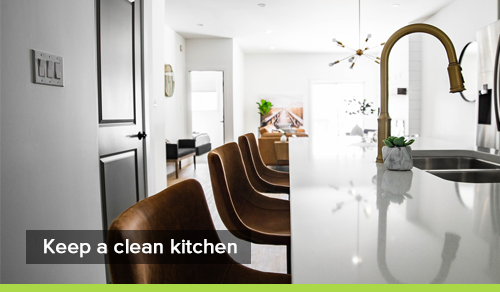
Keep a clean kitchen
Make sure there’s no food left out for pests to be attracted to. Keep your home clean of any crumbs and spillages. Insects and rodents are attracted to a good supply of food. Make sure you dispose of the leftovers and keep the food areas clean. Even the smallest crumbs will continue to attract pests to your home.
Make sure to:
- Clean any crumbs and spillages of food and water
- Remove any grease from counters
- Wash dirty dishes and store away any leftover food into containers
- Wipe down your sink and counters of any excess water
- Check around sinks and drains for leaks and contact a professional if you need any large leaks in piping to be sealed
- Remove and food and water sources
- Regularly throw out the trash and cover it with a lid
- Don’t leave pet food out on the floor
Keep your home clean and dry
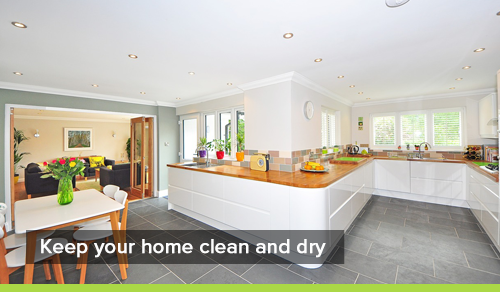
Thousands of insect pests can hide in or below the carpet, in the dirt in your bathroom or kitchen corners, and so on. Insects love damp environments, so eliminate moisture and wet spots. Check the caulk around tubs and the shower to make sure everything is draining properly. Look for water spots in your ceiling that could mean a hole in your roof. Holes can also be an entry spot for bugs. Vacuuming can also help remove spiders or other insects hiding in corners, behind furniture.

Keep a clean yard
Tallgrass, wild hedges, and large piles of leaves, wood, and the like all make ideal hiding and crawling grounds for pests. Clearing out any cluttered areas and getting rid of grass clippings and fallen leaves timely will take away their hiding spots, so your garden won’t attract them. Remove yard debris from around your home and outbuildings on a weekly basis. Some pests, such as black widow spiders, take up residence in dry, debris-filled areas.
Tip out any standing water and throw away any rubbish that’s laying around. This includes old tyers, containers, or any other materials that can collect water or provide places for pests to hide. Standing water is a perfect breeding ground for mosquitoes, which carry all kinds of dangerous diseases. Termites, ants and cockroaches like to hide out in woodpiles and the damp ground underneath. You want to provide a dry environment that bugs and rodents don’t find attractive. Keep firewood stacked on an elevated surface and stored away from your home.
How to pest proof your home
In conclusion, below are the main ways to prevent entry and bug proof your home:
- Seal cracks around windows and doors using good-quality silicone or acrylic latex caulk/sealant.
- Seal openings where pipes and wires enter the foundation and siding with mortar, caulk, urethane expandable foam or copper mesh.
- Repair gaps and tears in screens and around windows; the smaller the screen mesh, the harder it is for pests to enter.
- Don’t let trash or recycling accumulate.
- Keep walls and floors dry.
- Look for any cracks and gaps in the walls or foundation, and keep them sealed. Professional help is recommended.

Call a professional
Need help spotting issues or addressing issues that appear? Competitive Pest services can help you identify the type of pest and locate its most likely point of entry. We are specifically trained to advise and implement treatment that is right for you. Call us at 1300 766 614.