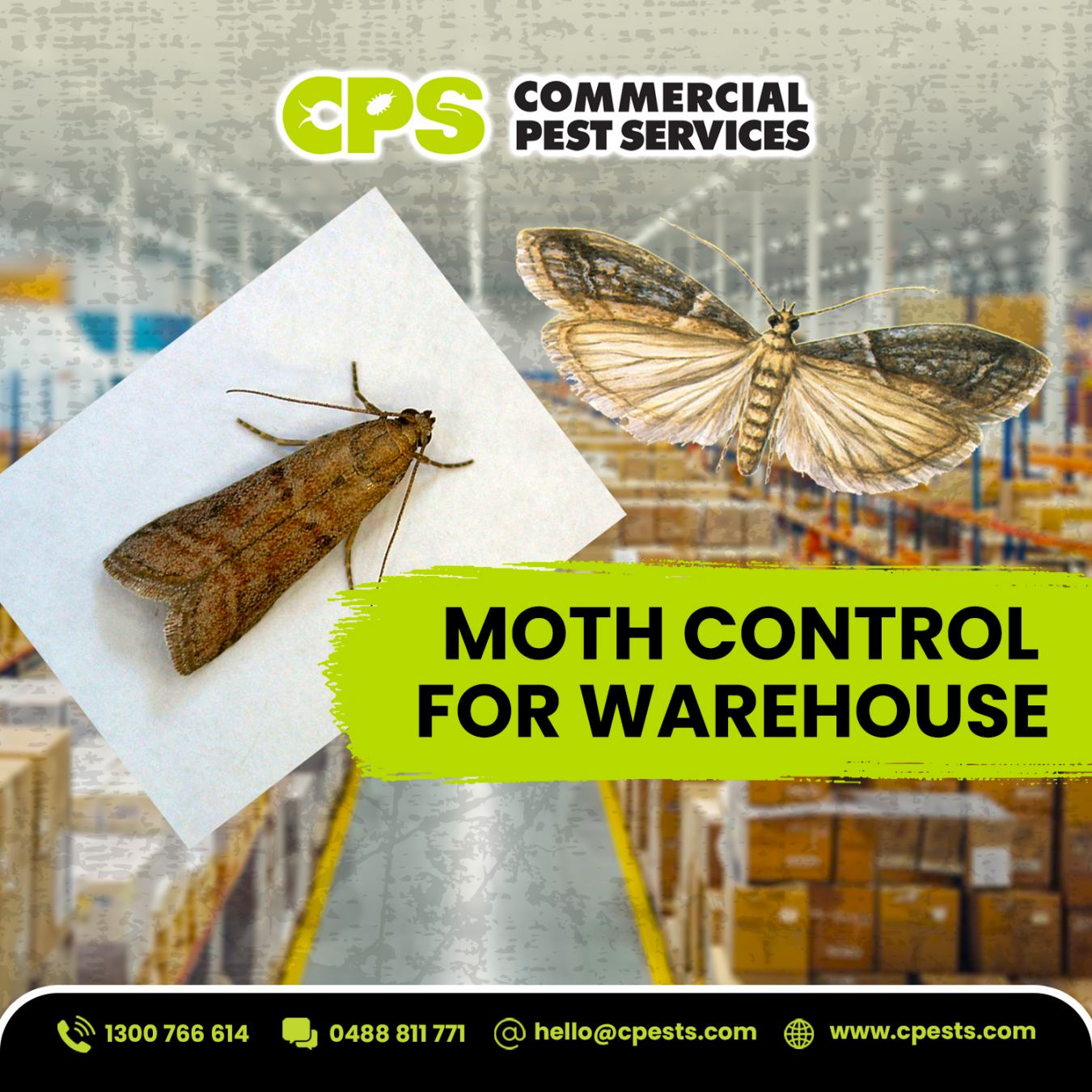
For warehouse managers and textile business owners, moth infestations are common pest problems. Without control of the sanitation process, moth infestation not only damages stocks but also disrupts the operation process, which can result in customer complaints. Consequently, unnecessary inventory losses can occur from a single infestation.
Many textiles, natural fibres, stored goods, and packaging materials are attracted to moth activity in commercial properties. The biggest challenge is that infestations often go unnoticed until visible damage appears across large sections of inventory.
This guide walks you through the biggest moth risks in commercial storage environments, how infestations develop, and the most effective strategies for long-term moth prevention and control.
Why Moth Infestations Are a Major Risk for Warehouses and Textile Businesses
Warehouses and textile stores provide everything moths need to thrive: dark storage areas, a quiet environment, fabric-based products, and stable indoor temperatures.
When infestations spread inside commercial facilities, the consequences can quickly escalate.
Common business risks include:
- Damage to clothing, carpets, upholstery, and natural fibre products
- Contamination of stored inventory
- Product write-offs and replacement costs
- Delayed shipments and operational downtime
- Reputation damage with retailers and commercial clients
- Increased compliance concerns in large-scale storage environments
The problem becomes even more serious in facilities storing wool, silk, cotton blends, leather, or organic packaging materials. Larvae feed directly on these materials, creating irreversible damage before businesses even detect activity.
That’s why early detection and preventive pest management are critical for commercial facilities.
Common Types of Fabric and Stored Product Moths in Commercial Facilities
Not all moths cause commercial damage. However, several species are particularly destructive in warehouses and textile environments.
Fabric Moths
Fabric moths are commonly found in textile warehouses, clothing storage facilities, and retail stockrooms.
These moths target these materials:
- Wool products
- Silk fabrics
- Carpets and rugs
- Upholstered furniture
- Felt and fur materials
The larvae, not the adult moths, are responsible for fabric destruction.
Stored Product Moths
Stored product moths are more common in facilities handling dry goods, grains, organic materials, or mixed inventory storage.
They can infest:
- Packaging materials & food storage areas, where plastic boxes and food remains are the most common areas.
- They feed on organic fibres as well.
- They can squeeze through the bulk goods or pallets where the gap holes or tiny gaps are ripped apart.
In large warehouses, infestations often spread between departments through ventilation systems, storage racks, and incoming shipments.
Signs of Infestation
Moth infestations rarely start in visible areas. In most cases, activity develops behind shelving, inside cartons, under pallets, or within rarely disturbed inventory.
Here are the most common warning signs warehouse teams should monitor.
Larvae, Webbing, and Fabric Damage
One of the earliest indicators is unexplained fabric deterioration.
Common signs include:
- Silky webbing on products or shelving
- Larvae casings found near storage areas
- Dust-like debris around affected stock
- Damaged corners or folds in packaged goods
Even minor signs can indicate a much larger hidden infestation.
Adult Moth Sightings and Hotspots
Adult moths are usually spotted near:
- Ship cargo load in and out near the loading docks, where adult moths are likely to invade.
- Adult moths can fly around ceiling lights, which are annoyingly disgusting.
- Hiding or nesting in dark storage aisles, which can cause mass infestation.
- Low-traffic inventory zones
- Ventilation systems
Repeated sightings in the same area often signal nearby breeding activity.
The important thing is acting early before moth populations spread across the facility.
Best Practices for Moth Control in Large-Scale Storage Facilities
Commercial moth control requires more than occasional spraying. Effective protection depends on consistent facility-wide prevention strategies.
Preventive Measures
Strong prevention systems significantly reduce the likelihood of large-scale infestations.
Proper Storage and Packaging Techniques
Storage practices play a major role in moth prevention.
Best practices include:
- Using sealed plastic containers where possible
- Keeping stock elevated off the floor
- Rotating inventory regularly
- Avoiding long-term stagnant storage
- Inspecting incoming shipments before warehouse entry
Proper packaging reduces moth access to vulnerable products and limits cross-contamination between storage zones.
Temperature and Humidity Control
Climate temperature plays a crucial role since moths thrive in dark, warm environments, where they can easily breed or build nests in moist places. The moisturizing problems, which are optimal living conditions for moths to reproduce the eggs in later stages. One way to control these invaders from harboring is to control the room temperature or climate conditions.
- Maintaining indoor room temperature consistently cool, dry, and well-ventilated while using exhaust fans, open airflow paths, or HVAC adjustments.
- For the production sites, consider using dehumidifiers in damp rooms, storage areas, and basement areas, which also help prevent molding.
- Fix the leaky pipes and clean and dry affected areas within 24-48 hours after water exposure.
Distinctively, these insects’ peak seasonality spans all four seasons across Australia.
Cleaning and Sanitation Routines
The production industry is the busiest operation while also maintaining a recycling process for eco-friendly environments for sustainability. Operations managers might indeed overlook the cleaning and sanitation routines, as most of them are occupied with their daily routines, site checks, client management, and ensuring the production runs smoothly. As these responsibilities are critical for the business growth as well as the strong reputation, the cleaning team makes sure to do deep cleaning while also separating the sector-by-sector sanitation.
Warehouse cleaning programs should focus on:
- Dust removal around shelving
- Vacuuming hidden corners and storage gaps
- Removing lint and fabric debris
- Cleaning under pallets and machinery
- Immediate disposal of damaged inventory
Even small accumulations of organic debris can support larval development.
Integrated Pest Management (IPM) Strategies for Commercial Moth Control
Integrated Pest Management (IPM) [CJ1] combines multiple control methods to reduce infestations while minimising operational disruption.
For commercial warehouses, IPM strategies often include:
- Regular inspections and monitoring
- Pheromone trap placement
- Environmental controls
- Targeted treatment applications
- Staff awareness training
- Ongoing risk assessments
This approach focuses on long-term prevention rather than short-term reactive treatment.
As a result, businesses gain better protection while reducing the likelihood of recurring infestations.
Chemical vs Non-Chemical Moth Treatments: What Works Best for Businesses?
Many warehouse operators ask whether chemical or non-chemical solutions deliver better results.
The answer usually depends on infestation severity, facility size, and operational requirements.
Chemical Treatments
Chemical treatments may include:
- Residual insecticide applications
- Fogging treatments
- Targeted crack-and-crevice treatments
These methods can quickly reduce active infestations in high-risk areas.
However, treatment plans must comply with commercial safety regulations and inventory protection standards.
Non-Chemical Treatments
Non-chemical approaches focus on prevention and environmental control.
These may include:
- Heat treatments
- Deep sanitation
- Pheromone monitoring systems
- Sealed storage systems
- Humidity reduction programs
For many textile businesses, combining both approaches delivers the strongest long-term protection.
How Professional Pest Control Services Manage Moth Infestations
Professional commercial pest control providers typically follow a structured management process.
Here’s how large-scale moth infestations are usually handled:
- Comprehensive facility inspection
- Identification of moth species and infestation sources
- Mapping of high-risk storage zones
- Custom treatment planning
- Targeted control applications
- Ongoing monitoring and reporting
Professional services also help businesses identify operational vulnerabilities contributing to recurring infestations.
For large warehouses and textile facilities, this level of expertise is often essential for long-term control.
Cost of Moth Infestations vs Preventive Control: A Business Perspective
Many businesses underestimate the financial impact of moth infestations until inventory losses become severe.
The costs can include:
- Product replacement
- Disposal of contaminated stock
- Operational disruption
- Lost customer trust
- Emergency treatment expenses
- Increased labour costs
Preventive pest management programs are typically far more cost-effective than reactive infestation treatment.
The bottom line? Early prevention protects both inventory and profitability.
Ongoing Monitoring and Maintenance for Long-Term Protection
Moth control is not a one-time solution.
Long-term protection requires consistent monitoring and maintenance across the entire facility.
Effective ongoing programs usually include:
- Scheduled pest inspections
- Monitoring trap systems
- Inventory audits
- Environmental monitoring
- Staff reporting procedures
- Seasonal risk assessments
Warehouses that maintain proactive pest management systems are far less likely to experience large-scale infestations.
Conclusion
Moth infestations can create serious operational and financial risks for warehouses and textile businesses. From damaged inventory to disrupted supply chains, the impact often extends well beyond visible fabric damage.
The good news is that infestations are highly manageable with the right prevention systems, storage practices, and professional support.
By combining sanitation, environmental control, monitoring, and targeted treatment strategies, commercial facilities can significantly reduce infestation risks and protect valuable stock long term.
Protect your warehouse inventory before moth damage affects your operations.
Whether you manage a textile facility, commercial warehouse, or large-scale storage operation, professional moth control solutions can help reduce risk, protect stock, and support long-term business continuity.
Book your free pests assessment with CPS today !