Send us a message and one of our specialists pest managers will be in touch
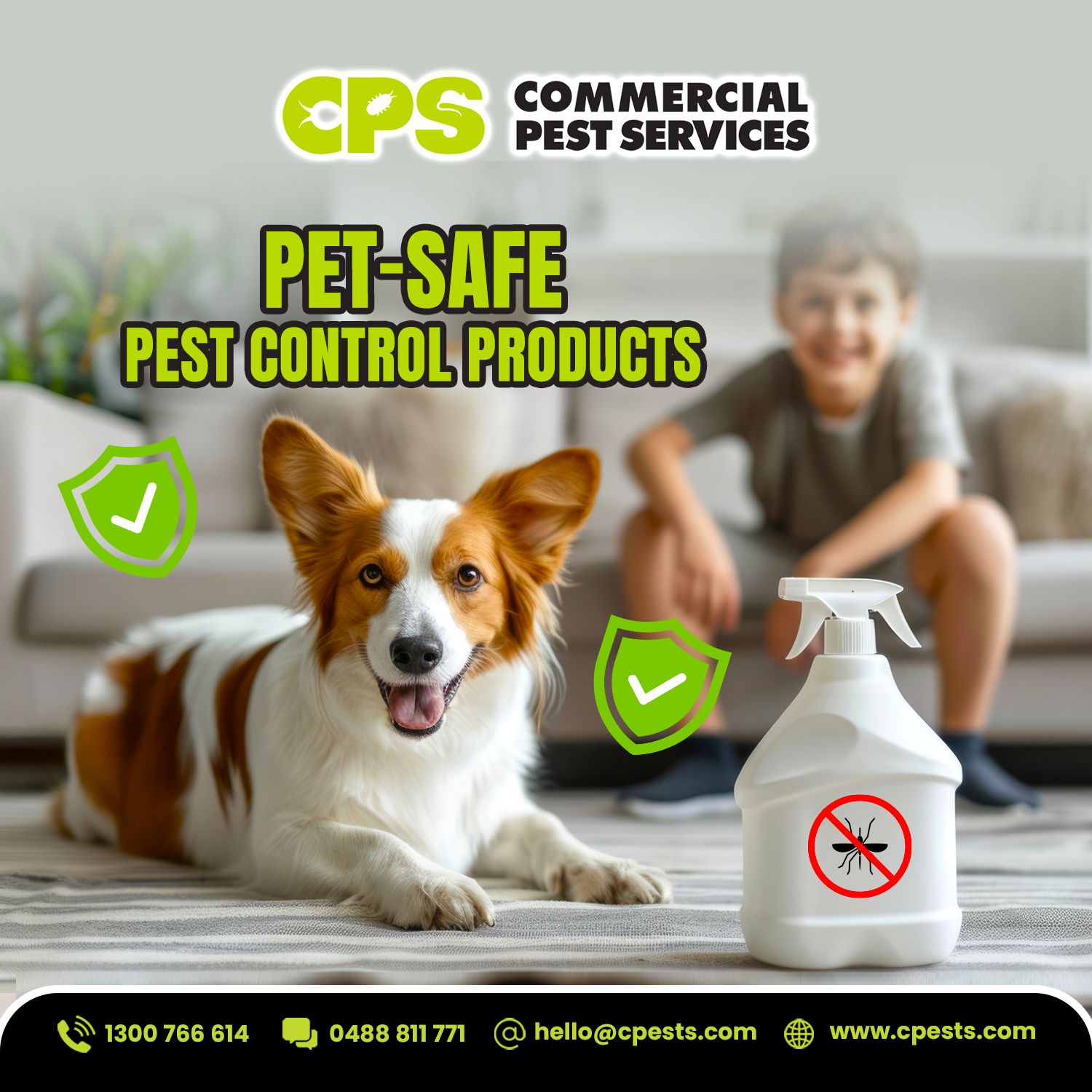
Pet-Safe Pest Control Products: What Australian Homeowners Need to Know
June 9, 2026
If you’ve ever Googled “pet-safe pest control” before booking a treatment, you’re already asking the right question. But here’s the thing, “pet-safe” doesn’t mean risk-free. It means using the right product, the right way, in the right place. The difference matters, especially when a curious puppy or free-roaming cat has access to every corner of your home. What “Pet-Safe” Actually Means The term gets used loosely […]
If you’ve ever Googled “pet-safe pest control” before booking a treatment, you’re already asking the right question. But here’s the thing, “pet-safe” doesn’t mean risk-free. It means using the right product, the right way, in the right place. The difference matters, especially when a curious puppy or free-roaming cat has access to every corner of your home.
What “Pet-Safe” Actually Means
The term gets used loosely in marketing. A product labelled “child and pet safe” isn’t necessarily harmless; it means it meets certain safety thresholds when used correctly.
Most pest-control products, including low-toxicity options, are safest once they’ve fully dried on treated surfaces. That window between application and drying is when pets are most at risk. “Natural” ingredients don’t automatically change that. Essential-oil-based sprays, for example, can still be toxic to cats. Reading label description is helpful.
Product Types Worth Knowing
Low-risk sprays
Some consumer-grade sprays use lower-risk active ingredients and are formulated for indoor and outdoor use. They’re a reasonable starting point for minor pest activity, but they still require pets to stay off treated surfaces until fully dry. Ventilate the area and follow re-entry times, usually listed on the label.
Traps and monitors
For rodents and crawling insects, targeted trapping reduces the need for broad chemical application. Sticky traps, enclosed bait stations, and monitoring devices can be highly effective when placed correctly, out of reach of pets and children. The key word is placed correctly. An open bait station at floor level is a hazard, not a solution.
Professional-grade products
Commercial formulations used by licensed pest controllers are often more targeted than what’s available off the shelf. That doesn’t make them safer by default; it makes them safer in the right hands.
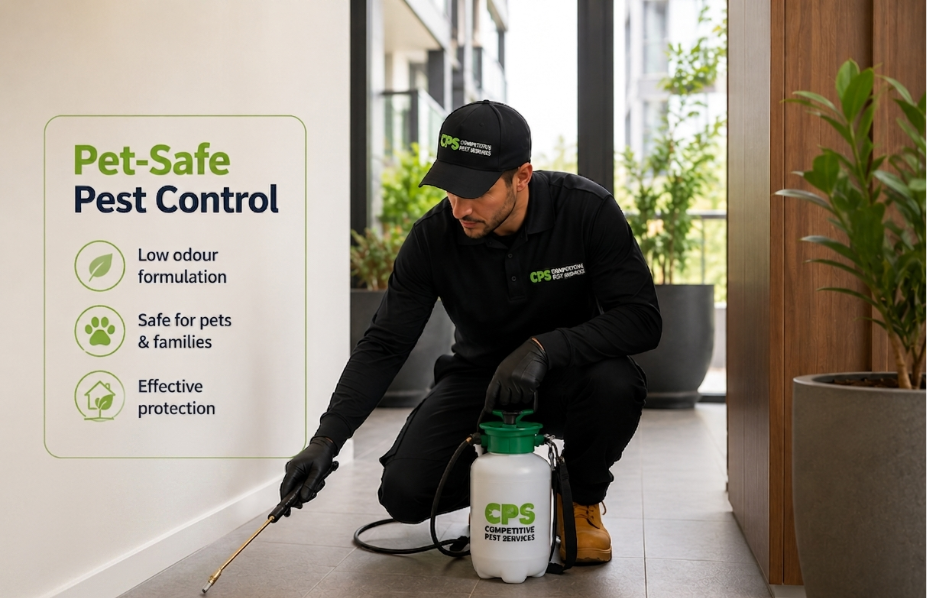
A professional can select lower-risk chemistries, apply precise dosages, and control re-entry timing in a way that a DIY approach can’t reliably replicate. If your home has dogs, cats, birds, or small animals like guinea pigs or reptiles, remind your pest controller before treatment begins. Different animals have different sensitivities.
Safe Use Practices
These apply whether you’re doing it yourself or having a professional treat your home:
Keep pets off treated surfaces until completely dry, not just damp, fully dry.
Cover or remove aquariums, food and water bowls, and pet bedding before treatment. Fish are particularly sensitive to airborne chemicals.
Store all pest-control products in sealed containers, out of reach of animals.
Ventilate treated areas and wipe down surfaces where appropriate after service.
What to Avoid
Broad, untargeted spraying across your entire home creates unnecessary exposure. If the problem is a trail of ants near the kitchen, treating the whole house isn’t the answer. Match the treatment to the problem.
Don’t assume “natural” means safe. Pyrethrin, derived from chrysanthemums, is a common “natural” insecticide that’s highly toxic to cats. Peppermint oil, while not acutely toxic, can cause respiratory irritation in some animals.
And never leave accessible bait, traps, or treated materials where pets can reach them. A rodenticide that works by internal bleeding doesn’t discriminate between rodents and dogs.
The Best Approach for Pet Owners
Start with the least disruptive option that actually solves the problem. Before reaching for a spray, consider:
Sanitation — removing food sources, sealing bins, and cleaning up spills promptly.
Exclusion — sealing cracks, gaps around pipes, and entry points where pests get in.
Monitoring — identifying the pest and understanding its behaviour before treating.
Chemicals work best as part of this approach, not as a substitute for it. When treatment is necessary, targeted is better than broad. Spot treatments beat whole-room applications. Enclosed bait stations beat open bait placements.
The Bottom Line
Pet-safe pest control comes down to three things: choosing the right product, applying it correctly, and controlling access until it’s safe. No product is risk-free in the wrong hands or in the wrong conditions. The safest outcomes come from combining targeted treatment, good housekeeping, and careful re-entry timing.
Still not sure what is safest for your home and pets?
Hand it over to the professionals. Contact CPS to arrange a pet-conscious pest inspection and get the right treatment advice before you apply anything yourself.
Contact CPS today to arrange a professional inspection and tailored treatment plan.
We acknowledge the Traditional Custodians of Country throughout Australia and their connections to land, sea, and community.
We pay our respect to their Elders past and present and extend that respect to all Aboriginal and Torres Strait Islander peoples today.