Send us a message and one of our specialists pest managers will be in touch
Why Poor Sanitation Is the Real Cause of Most Commercial Pest Infestations
June 29, 2026
Poor sanitation remains the leading cause of commercial pest infestations. In commercial settings such as food processing facilities, restaurants, healthcare providers, and aged care facilities, lapses in cleanliness create ideal conditions for unwanted pests. These environments demand a safe and hygienic environment to protect employees, customers, and business operations. Understanding how poor sanitation fuels pest problems is […]
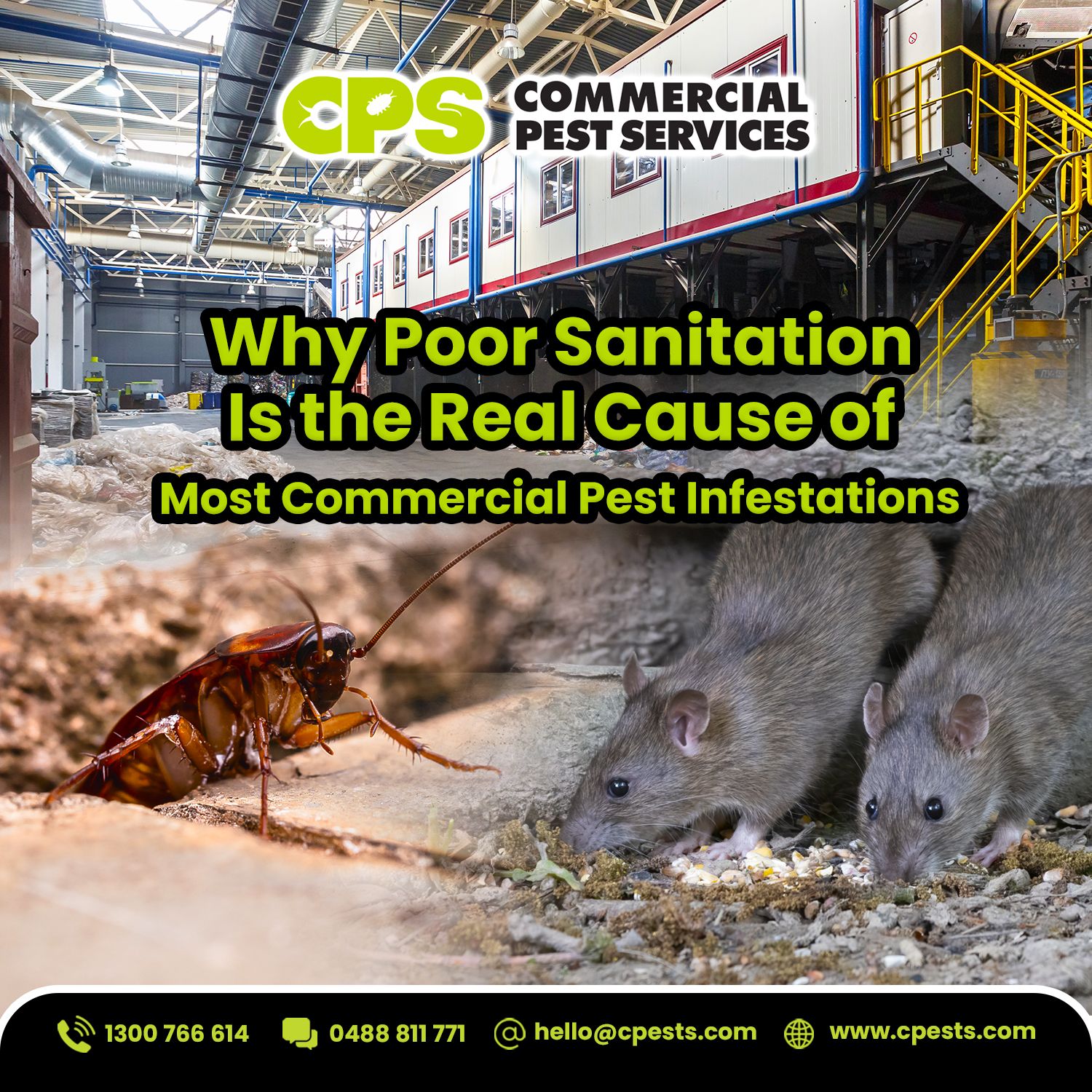
Poor sanitation remains the leading cause of commercial pest infestations. In commercial settings such as food processing facilities, restaurants, healthcare providers, and aged care facilities, lapses in cleanliness create ideal conditions for unwanted pests. These environments demand a safe and hygienic environment to protect employees, customers, and business operations. Understanding how poor sanitation fuels pest problems is key to effective pest control solutions.
Why Poor Sanitation Drives Infestations
Food waste left unsecured attracts rodents and stored product pests. Rodents chew through packaging and contaminate food supplies, posing significant health risks. Standing water from leaks or improper drainage provides breeding grounds for flying insects like flies and mosquitoes. Cluttered areas offer shelter and harbourage for cockroach infestations and other pests, allowing populations to thrive unnoticed. These sanitation lapses often lead to failed health audits and regulatory fines, putting businesses at risk.
Commercial Pest Control Risks For Commercial Buildings
Pests damage goods by contaminating food supplies and equipment. Infestations jeopardize compliance with food safety standards and industry regulations, increasing the risk of costly penalties.
Moreover, pest problems harm a business’s reputation, driving away customers and reducing customer satisfaction. Infestations also cause downtime, disrupting business operations and leading to financial losses. Investing in professional pest control services helps prevent these risks and maintain a safe and healthy environment.
Restroom sanitation practices ensure toilets and washrooms remain hygienic, reducing pest attraction.
Food preparation and kitchen sanitation focus on cleaning surfaces and equipment to prevent contamination and pest access.
High-touch surface disinfection targets frequently used areas to eliminate pathogens and pests.
Proper waste management and disposal remove food sources and breeding sites, forming a crucial part of pest prevention.
What Is a Pest-Free Environment?
A pest-free environment looks clean, orderly, and well-maintained. It features proper waste management, no standing water, and clutter-free spaces. Doors and windows have physical barriers to prevent pest entry. Regular inspections and ongoing monitoring detect early signs of pest activity, allowing prompt action. This environment supports business compliance, employee health, and customer confidence.
Which City in Australia Has the Most Insects?
Sydney (NSW): leads in cockroach and spider activity, especially in dense inner-city suburbs like Surry Hills and Marrickville.
Brisbane (QLD): tops trends for mosquitoes, ants, and termites due to its warm, sub-tropical climate.
Darwin (NT): experiences surges in termites and midges during the tropical wet season.
Melbourne (VIC): generally has fewer pests because of its cooler, temperate weather.
Chemical Treatments, Eco-Friendly and Control Methods Options
Chemical treatments become necessary when infestations exceed manageable levels through sanitation and physical controls.
Commercial pest control companies use safe chemical treatments, including insect growth regulators and targeted baits, applied with personal protective equipment (PPE) to ensure safe handling. Eco-friendly alternatives, such as habitat modification and integrated pest management (IPM), reduce chemical reliance.
Advanced techniques like SMART digital pest control enable ongoing monitoring and early intervention. Combining these methods delivers effective pest control while maintaining a safe and healthy environment.
Common Pests Linked To Poor Sanitation
Cockroaches thrive on food residues and moisture, making kitchen and food storage areas vulnerable. Rodents seek unsecured waste and cluttered spaces for shelter and food, spreading diseases and contaminating products. Stored product pests infest improperly stored grains and packaged goods, damaging inventory. Flying insects breed in standing water and waste, posing hygiene risks. Recognizing these pests and their links to sanitation issues helps tailor comprehensive pest management solutions.
Protecting Business Reputation And Compliance
Documenting pest incidents supports audit readiness and regulatory compliance. Communicating remediation steps to stakeholders maintains transparency and trust. Scheduling regular commercial pest control visits with a reputable pest control company ensures ongoing protection. Competitive Pest Services (CPS) offers a 200% service guarantee, delivering reliable and thorough pest control solutions tailored to your business needs.
Choosing A Long-Term Commercial Pest Program
Annual integrated pest management contracts provide continuous professional development and proactive pest control. Multi-site digital monitoring deployment allows real-time tracking of pest populations across business premises. Seasonal treatment scheduling targets peak pest activity periods for maximum effectiveness. Transparent pricing ensures businesses understand costs upfront, avoiding surprises. Tailored solutions address unique pest challenges in commercial environments, ensuring comprehensive solutions for all pest control needs.
Concerned that sanitation gaps may be attracting pests to your commercial property?
Contact CPS to arrange a professional site inspection and identify food waste, moisture, harbourage areas, entry points, and hygiene risks before they become larger infestation problems.
Contact CPS today to arrange a professional inspection and tailored treatment plan.
We acknowledge the Traditional Custodians of Country throughout Australia and their connections to land, sea, and community.
We pay our respect to their Elders past and present and extend that respect to all Aboriginal and Torres Strait Islander peoples today.