Send us a message and one of our specialists pest managers will be in touch
Why Do Pests Enter Homes? Understanding What Attracts Them
September 26, 2026
Have you ever wondered why ants suddenly appear in your kitchen or why cockroaches seem to show up overnight? Many people believe pests enter homes by chance. However, there is usually a simple reason behind their arrival. Like all living creatures, pests are searching for the essentials they need to survive. If your home provides […]
Have you ever wondered why ants suddenly appear in your kitchen or why cockroaches seem to show up overnight? Many people believe pests enter homes by chance. However, there is usually a simple reason behind their arrival.
Like all living creatures, pests are searching for the essentials they need to survive. If your home provides food, water or shelter, it can become an attractive place for them to settle.
Fortunately, understanding what attracts pests is the first step towards preventing future infestations.
Food Is One of the Biggest Attractions
Food is often the main reason pests enter a home.
Even small crumbs under the dining table, uncovered fruit on the kitchen bench or pet food left out overnight can attract ants, cockroaches and rodents. Pantry items stored in opened packets may also become a food source for pantry pests.
Rubbish bins are another common attraction. When food waste builds up or bin lids remain open, pests can quickly find their way inside.
Keeping food sealed and cleaning up after meals reduces the opportunities pests are looking for.
Water Helps Pests Survive
Many household pests need a reliable water source.
Leaking taps, damp cupboards, blocked drains and standing water around sinks create ideal conditions for cockroaches, ants and other insects. During Australia’s warmer months, water collected in buckets, pot plant trays or bird baths can also encourage mosquito breeding.
Repairing leaks and reducing excess moisture makes your home much less inviting to pests.
Shelter Gives Pests a Safe Place to Hide
Once pests find food and water, they look for somewhere safe to live.
Roof spaces, wall cavities, garages, storage rooms and cluttered areas provide excellent hiding places. Rodents often nest in quiet locations, while cockroaches prefer dark, warm spaces close to kitchens and bathrooms.
Outside the home, overgrown gardens, timber piles and dense vegetation can also provide shelter before pests move indoors.
How Do Pests Get Inside?
Pests do not need large openings to enter your home.
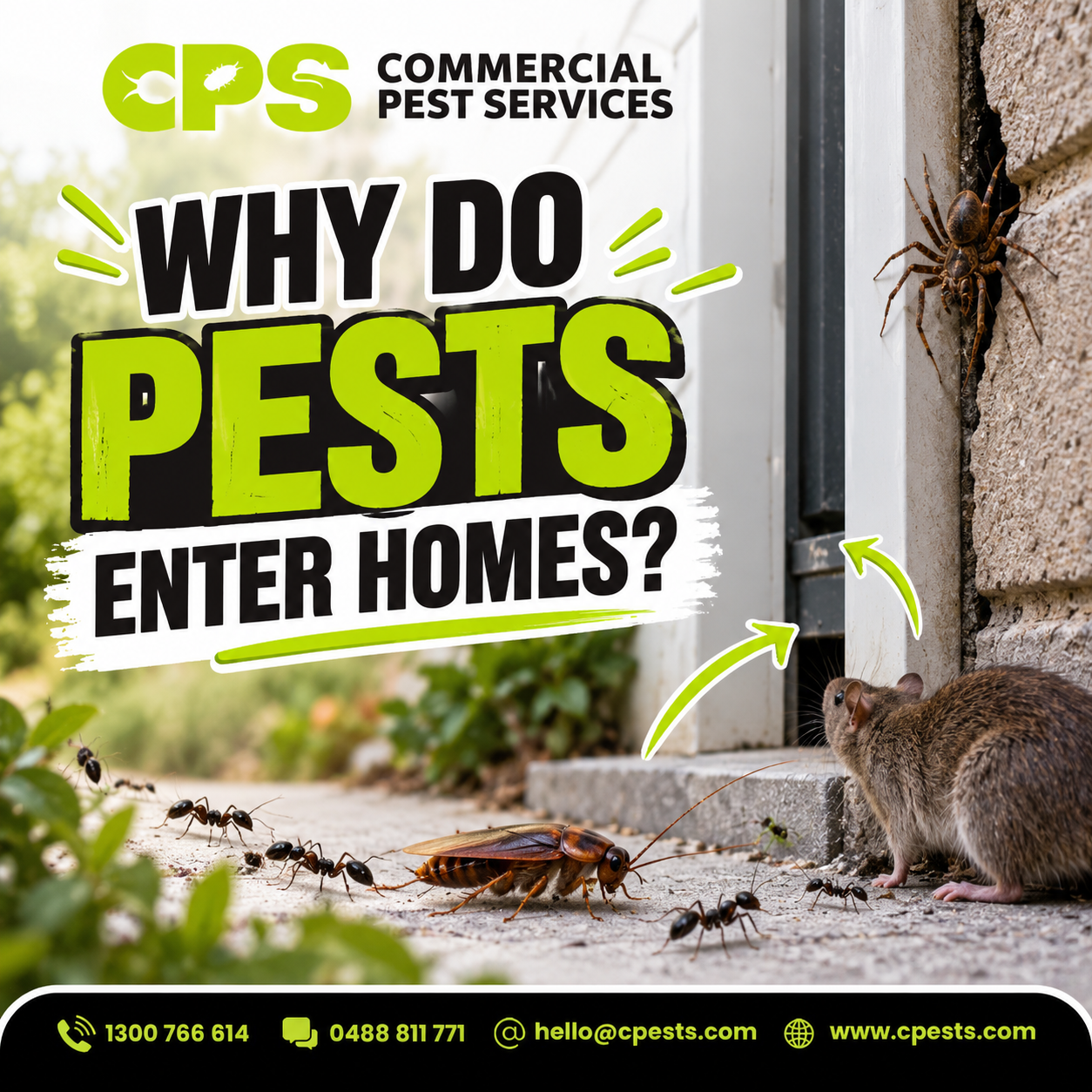
Small gaps beneath doors, damaged flyscreens, cracks around windows and spaces where utility pipes enter the building are all common entry points. Rodents can squeeze through surprisingly small openings, while ants only need tiny cracks to find their way inside.
Air Condition vents are also common entry points for pests. Read More.
Regularly checking these areas helps reduce the number of opportunities for pests to enter.
Seasonal Changes Can Increase Pest Activity
The time of year also affects pest behaviour.
During summer, warm weather encourages ants, cockroaches, flies and mosquitoes to become more active. They breed faster and spend more time searching for food and water.
When temperatures become cooler, rodents often move indoors in search of warmth and shelter. After heavy rain, some pests may also enter homes to escape wet conditions.
Understanding these seasonal patterns helps homeowners stay one step ahead.
Simple Ways to Make Your Home Less Attractive to Pests
Good pest prevention starts with everyday habits.
Store food in airtight containers.
Empty rubbish bins regularly.
Clean food spills immediately.
Repair leaks.
Remove standing water.
Improve ventilation in damp areas.
Trim vegetation away from home and keep garden tidy
Seal gaps around doors, windows, and utility pipes.
These simple steps make it harder for pests to find the food, water and shelter they need.
Prevention Starts With Understanding
Pests do not usually enter homes by accident. They are responding to conditions that help them survive.
By understanding what attracts pests and making a few practical changes around your property, you can greatly reduce the risk of infestations.
If pests continue returning despite your efforts, professional pest control services can identify hidden issues and provide tailored pest management solutions for long-term protection.
We acknowledge the Traditional Custodians of Country throughout Australia and their connections to land, sea, and community.
We pay our respect to their Elders past and present and extend that respect to all Aboriginal and Torres Strait Islander peoples today.