Send us a message and one of our specialists pest managers will be in touch
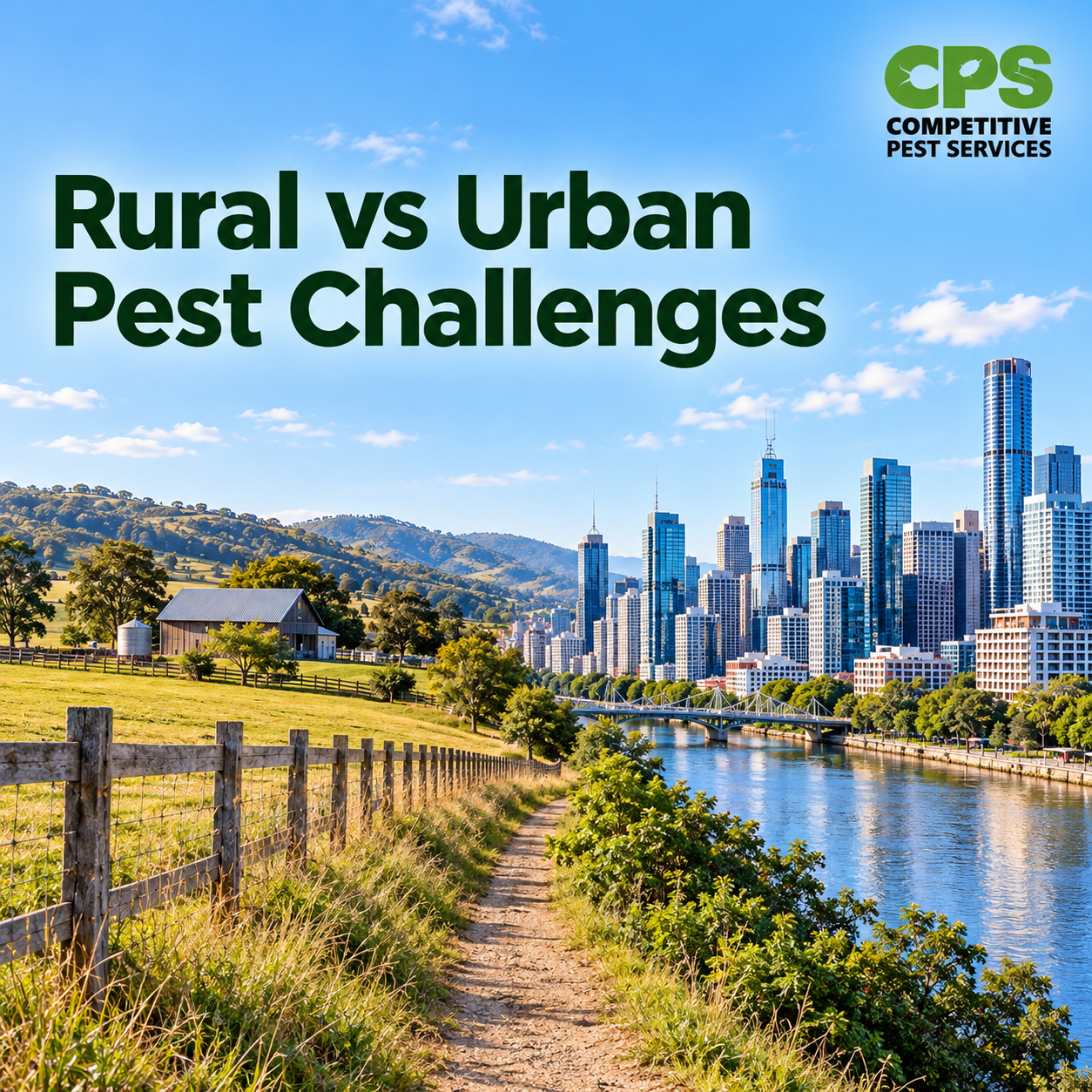
Rural vs Urban Pest Challenges in Australia
November 12, 2026
Pests live across almost every part of Australia. A suburban home faces different pest pressures from a farm, rural property, or regional business. Likewise, a warehouse in a busy city may experience different risks from a property surrounded by bushland.
Pests live across almost every part of Australia, but the challenges they create can look very different depending on where you live or operate.
A suburban home faces different pest pressures from a farm, rural property, or regional business. Likewise, a warehouse in a busy city may experience different risks from a property surrounded by bushland.
The environment plays an important role because pests respond to available food, water, shelter, vegetation, buildings, and human activity.
Understanding these differences helps property owners choose more effective pest prevention strategies.
Rural Properties Have More Natural Pest Pressures
Rural properties usually sit closer to natural habitats and agricultural environments.
Fields, livestock areas, vegetation, dams, sheds, compost, stored feed, and farm equipment can provide food and shelter for many pests. Rodents, flies, ants, birds, termites, and other insects can therefore find plenty of opportunities around rural properties.
Agricultural activities can also create seasonal changes in pest activity. Harvesting, irrigation, livestock movement, crop storage, and changes in vegetation can influence where pests gather.
As a result, rural pest management often needs to consider the wider property rather than one building.
Urban Properties Create Different Opportunities
Cities replace many natural environments with buildings, roads, drainage systems, gardens, waste areas, and commercial facilities.
However, this does not mean urban properties have fewer pests. Instead, cities provide reliable sources of food, water, warmth, and shelter. Restaurants, supermarkets, apartment buildings, waste collection areas, gardens, and commercial kitchens can all attract pests.
Cockroaches, ants, flies, rodents, mosquitoes, and birds can adapt particularly well to these conditions.Furthermore, closely connected buildings can make pest movement more difficult to manage.
Read more how urbanization influences pest behaviours in cities and understand better to prevent smarter.
Why Location Changes Pest Behaviour
A pest does not simply choose a property because of its location. It chooses an environment that meets its needs.
For example, a rural shed may offer rodents shelter and stored grain. Meanwhile, an urban restaurant may offer cockroaches warmth, moisture, and food.
Similarly, a rural property may experience greater exposure to outdoor pests, while an apartment may face greater risks from shared walls, plumbing, rubbish areas, and neighbouring properties.
Therefore, pest management should always consider the surrounding environment.
Prevention Looks Different in Each Setting
Rural property owners may need to focus on vegetation management, livestock areas, stored materials, waste, water sources, and building maintenance.
Urban properties may require stronger attention to sanitation, waste management, building entry points, drainage, food storage, and shared spaces. Explore our residential pest control.
In both environments, however, early detection remains important.
Australia’s diverse environments require flexible pest management approaches.
CPS, as a national pest control service with 25 years of experience, understands different locations and different pest risks. We focus on identifying the root cause of pest problems and approach with the most effective solution for each problem.
We not only offer service but we offer partnership. We are not happy unless you are happy.
We acknowledge the Traditional Custodians of Country throughout Australia and their connections to land, sea, and community.
We pay our respect to their Elders past and present and extend that respect to all Aboriginal and Torres Strait Islander peoples today.