Send us a message and one of our specialists pest managers will be in touch
Rats vs Mice: What Is the Difference?
August 31, 2026
Rodents are among the most common household pests in Australia. However, many people find it difficult to tell the difference between rats and mice. Although they belong to the same family, they behave differently and create different risks around your home. Understanding which rodent has entered your property can help you respond more effectively. It also helps […]
Rodents are among the most common household pests in Australia. However, many people find it difficult to tell the difference between rats and mice. Although they belong to the same family, they behave differently and create different risks around your home.
Understanding which rodent has entered your property can help you respond more effectively. It also helps pest control professionals recommend the most suitable treatment for long-term protection.
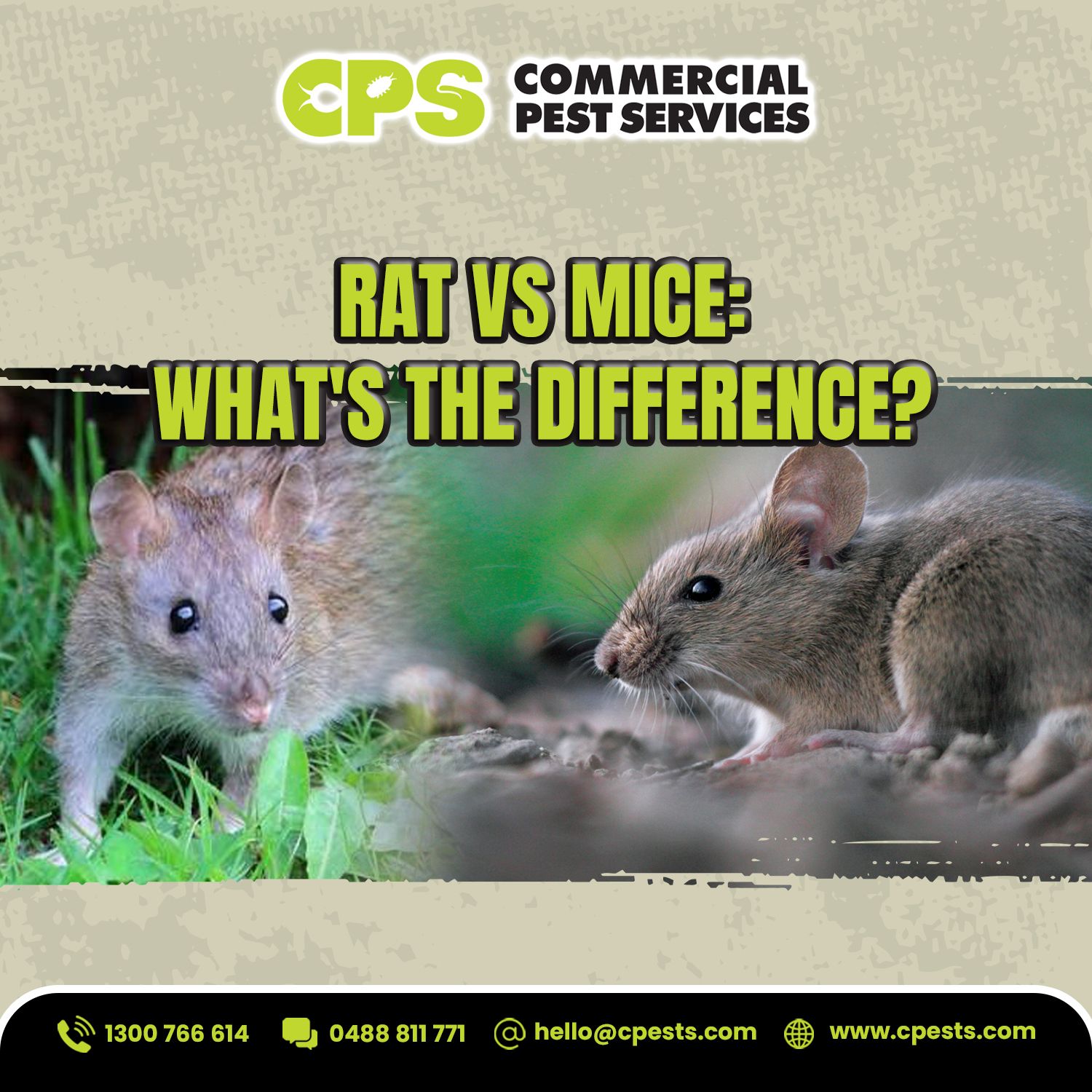
Rats are much larger than mice. They have thicker bodies, blunt noses, and long, thick tails. Mice are smaller, with pointed noses, larger ears, and thinner tails.
Their behaviour also differs. Rats tend to be cautious and avoid new objects, while mice are naturally curious and explore new areas more quickly.
Although both can live indoors, they often choose different hiding places.
Rat
Mice
Larger body
Smaller Body
Thick tail
Thin tail
Blunt nose
Pointed nose
Larger droppings
Smaller droppings
Where Do Rats and Mice Usually Hide?
Rats often prefer roof voids, subfloors, drains, gardens, and larger outdoor spaces before entering homes.
On the other hand, mice usually stay closer to food sources. They commonly hide inside kitchen cupboards, wall cavities, roof spaces, garages, and storage rooms.
Because both rodents remain hidden during the day, homeowners may not notice them until activity increases.
Common Signs of Rodent Activity
Whether you have rats or mice, the warning signs are often similar.
Look out for:
Droppings around cupboards or pantries
Gnaw marks on food packaging or timber
Scratching noises inside walls or ceilings
Damaged electrical cables
Unpleasant odours in hidden spaces
Generally, rat droppings are larger than mouse droppings, making them one of the easiest ways to tell the difference.
Why Rodents Should Never Be Ignored
Both rats and mice reproduce quickly. As a result, a small problem can become a larger infestation within a short period.
Rodents may contaminate food, damage insulation, chew electrical wiring, and create costly repairs. They can also spread bacteria through their droppings and urine.
The earlier the problem is identified, the easier it is to manage.
What Can You Do?
Good housekeeping plays an important role in rodent prevention.
Store food in sealed containers, clean food spills promptly, and empty rubbish bins regularly. In addition, seal gaps around doors, pipes, and vents where rodents may enter.
If you continue seeing signs of rodent activity, a professional pest inspection is the next step. An inspection helps identify nesting areas, entry points, and the most suitable treatment for your home.
Know the Difference and Act Early
Although rats and mice may appear similar, they behave differently and require different management approaches.
Understanding the signs helps homeowners respond earlier and reduce the risk of larger infestations.
At Competitive Pest Services, we provide professional rodent inspections and tailored residential pest control solutions that address the source of the problem. Because when it comes to rodents, early action always provides better long-term protection.
We are committed to providing services that are effective, transparent, and easy to understand.
Book an inspection now with CPS today to arrange a professional inspection and tailored treatment plan.
We acknowledge the Traditional Custodians of Country throughout Australia and their connections to land, sea, and community.
We pay our respect to their Elders past and present and extend that respect to all Aboriginal and Torres Strait Islander peoples today.