Send us a message and one of our specialists pest managers will be in touch
What Happens to Pests in a Building During a Major Renovation?
June 4, 2026
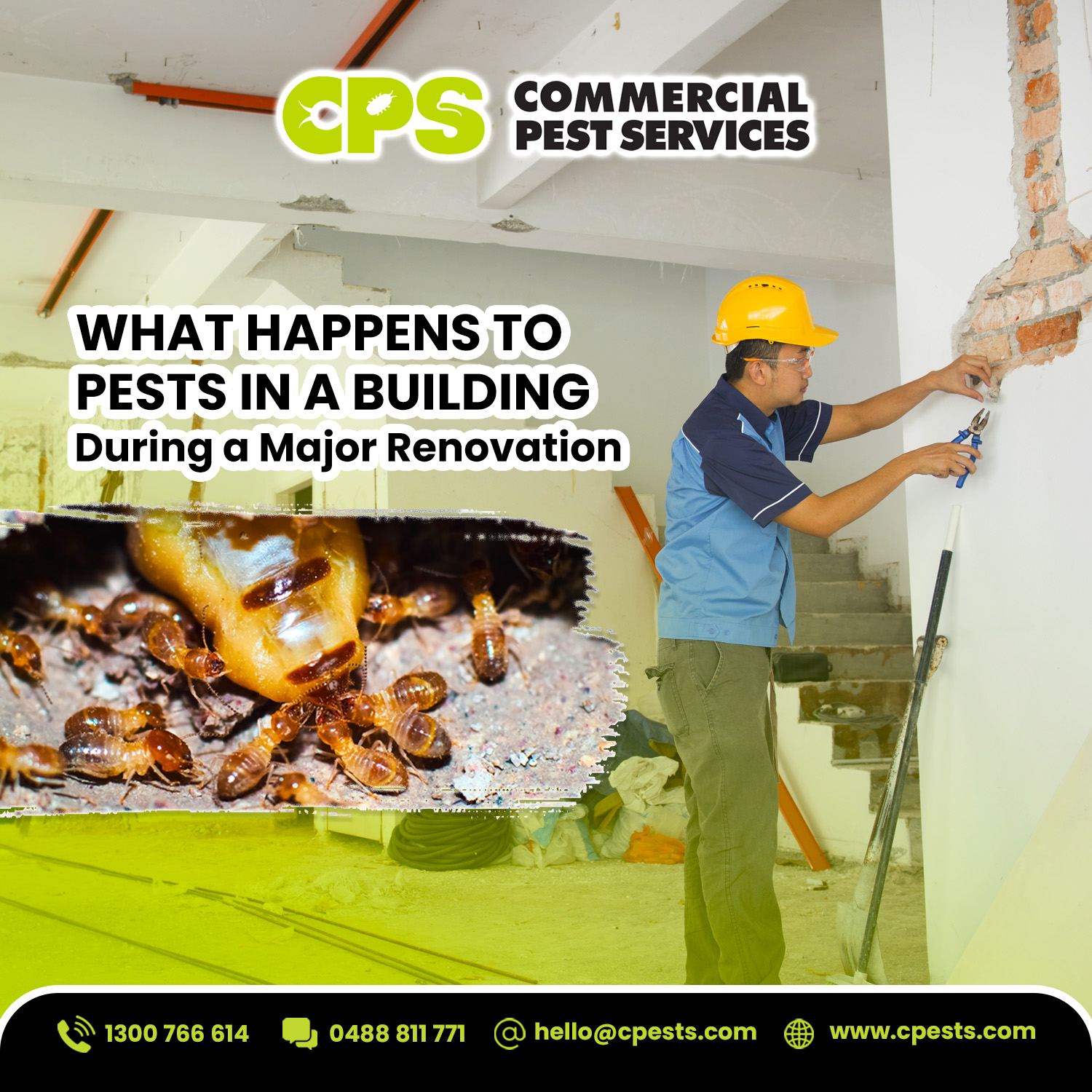
Major renovations can completely change how pests behave inside a building. Renovation work often disturbs pests that have been hiding quietly for months or even years. When builders open walls, remove flooring, expose ceilings, or begin demolition, rodents, cockroaches, termites, and other pests may suddenly move into visible areas. Builders, property owners, facility managers, and […]
Major renovations can completely change how pests behave inside a building.
Renovation work often disturbs pests that have been hiding quietly for months or even years. When builders open walls, remove flooring, expose ceilings, or begin demolition, rodents, cockroaches, termites, and other pests may suddenly move into visible areas.
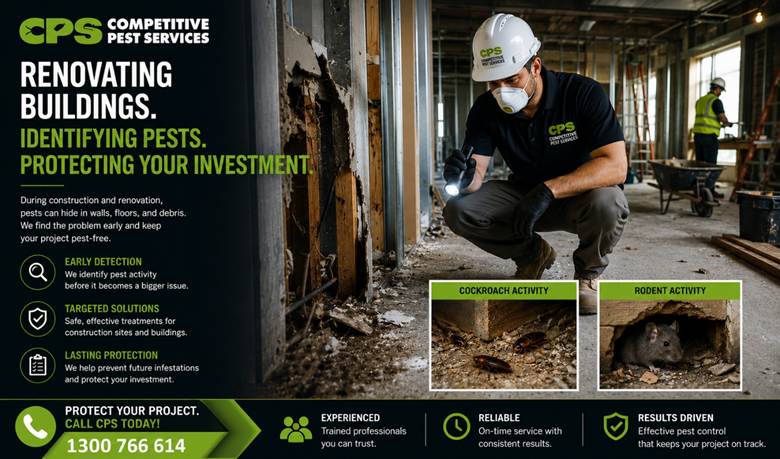
Builders, property owners, facility managers, and contractors often discover rodents in wall cavities, cockroaches in service voids, or termite damage behind old timber and plasterboard.
Renovation work changes the environment inside a building very quickly. Dust, vibration, moisture changes, exposed materials, and structural movement can all push pests into new areas.
For residential, commercial, and multi-tenant properties, pest management should be part of the renovation plan from the beginning, not something handled after the work is already underway.
Why Renovations Disrupt Pest Activity
Most pests prefer dark, quiet, hidden spaces where they can avoid people and build nests safely.
Over time, pests settle into areas such as:
Wall cavities
Ceiling voids
Under flooring
Roof spaces
Service penetrations
Storage areas
Damp subfloors
When renovation work begins, these hidden areas are suddenly disturbed.
Drilling, demolition, sanding, cutting, and structural changes create vibration and noise that force pests to move. At the same time, walls and flooring that once protected nests become exposed.
Renovations also change:
Airflow
Temperature
Light exposure
Moisture conditions
Even small structural changes can disturb pest harbourage areas and cause pests to relocate through the building.
In busy renovation sites, the constant movement of workers, tools, waste materials, and deliveries can also create new food and hiding opportunities for pests.
Common Pests Found During Renovations
Rodents
Rodents are one of the most common pests discovered during renovation work.
Rats and mice often hide inside:
Wall cavities
Ceiling spaces
Roof voids
Insulation
Storage rooms
Under kitchen cabinetry
Once demolition starts, rodents may suddenly appear as their nesting areas are disturbed.
Technicians often find:
Droppings
Gnaw marks
Nesting materials
Grease marks
Damaged insulation
In commercial buildings, rodents may spread into neighbouring units or newly opened areas during construction work.
Cockroaches
Cockroaches are commonly found inside:
Damp wall voids
Kitchen cavities
Plumbing penetrations
Behind tiles
Electrical service areas
German cockroaches especially prefer warm, hidden areas close to food and moisture.
During renovation work, cockroaches often scatter quickly once their hiding places are exposed.
It is common to see increased cockroach activity during:
Kitchen renovations
Bathroom upgrades
Plumbing works
Commercial fit-outs
Ants
Ant colonies are often hidden inside:
Wall spaces
Garden edges
Foundations
Concrete cracks
Paving gaps
Excavation and structural movement can disturb ant colonies and push them into surrounding rooms or neighbouring properties.
Moisture changes during renovation can also attract ants into newly exposed areas.
Termites
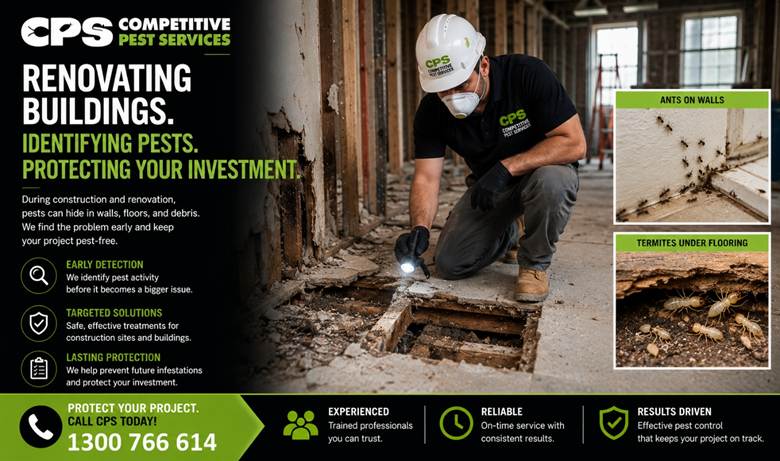
Termites are one of the biggest concerns during renovations because damage is often hidden behind walls, timber framing, flooring, or subfloors.
Many infestations are only discovered once:
Plasterboard is removed
Flooring is lifted
Timber framing becomes exposed
Water damage is uncovered
In some cases, renovations accidentally disturb termite workings without fully treating the colony, allowing termites to relocate deeper into the structure.
Other Hidden Pests
Renovation work may also uncover:
Spiders
Silverfish
Stored product pests
Wasps
Bird nesting activity
These pests usually stay hidden in undisturbed areas for long periods until demolition exposes them.
How Pests React During Demolition
Different pests react differently when construction work begins.
Some pests immediately flee the area once vibration and movement increase.
Others become more active and visible because their nesting sites are damaged or exposed.
In many cases:
Rodents move into nearby rooms
Cockroaches spread through wall cavities
Ant colonies relocate
Termites move deeper into timber structures
One of the biggest problems during renovation is that pests often spread into clean or newly renovated spaces.
For example, rodents disturbed during demolition may enter:
Newly installed ceilings
Fresh insulation
Adjacent apartments
Storage rooms
Office areas
Without proper pest management, construction activity can accidentally spread infestations through the building.
Risks Caused by Renovation Work
Renovation-related pest activity can create several problems for both residential and commercial properties.
Pest spread
Disturbed pests may spread into areas that were previously unaffected.
Damage to new materials
Rodents and termites may damage:
New timber
Insulation
Electrical wiring
Stored materials
Packaging
Health and hygiene concerns
Pest activity may expose workers to:
Droppings
Bacteria
Allergens
Contaminated dust
This becomes especially important in:
Food facilities
Healthcare environments
Schools
Commercial buildings
Delays and additional costs
If infestations are discovered late in the project, work may stop while inspections and treatments are completed.
Termite damage can also lead to unexpected structural repairs, significantly increasing renovation costs.
Signs Pests Are Active During Renovation
During renovation work, technicians and contractors should watch for:
Rodent droppings
Nesting materials
Dead insects
Gnaw marks
Frass from termites
Damaged timber
Mud tubes
Shed insect skins
Webbing
Strong odours
Live pest sightings
Movement inside ceilings, walls, or voids may also indicate hidden activity.
Even small signs should be investigated early before pests spread further through the building.
How to Prevent Pest Problems Before Work Starts
One of the best ways to reduce renovation-related pest problems is to inspect the property before demolition begins.
Arrange a pre-renovation inspection
A pest inspection can identify:
Existing infestations
Hidden termite damage
Rodent nesting areas
Moisture problems
Structural risk areas
Seal entry points
Block gaps around:
Pipes
Doors
Roofing
Wall penetrations
Vents
This helps reduce pest movement during construction.
Remove clutter and waste
Stored materials, cardboard, debris, and rubbish create ideal hiding areas for pests.
Fix leaks and moisture issues
Many pests are attracted to damp conditions. Plumbing leaks and water damage should be addressed before renovation begins.
Plan pest management early
Builders and pest technicians should coordinate before demolition starts rather than reacting once pests appear.
Pest Management During Renovation
Good communication between contractors and pest technicians is important throughout the project.
As walls, flooring, and ceilings are opened, exposed areas should be inspected regularly for hidden pest activity.
If hotspots are found:
Treatments should be carried out quickly
Infested materials may need removal
Entry points should be sealed
Moisture problems should be corrected
Construction sites should also stay clean throughout the project.
Food waste, rubbish, and excess clutter can quickly attract rodents, cockroaches, and ants.
After-Renovation Monitoring
Once renovation work is complete, the building should be reinspected.
Construction activity often creates:
New entry points
Gaps around services
Moisture problems
Disturbed nesting areas
Monitoring after renovation helps identify whether pests have:
Returned
Relocated
Spread into new areas
Ongoing prevention is important, especially in commercial or multi-tenant properties where pest pressure may continue long after the project is finished.
When to Call a Professional
Professional pest management support is strongly recommended when:
Termites are discovered
Rodent activity is widespread
Infestations spread during demolition
Hidden moisture damage is exposed
The property is commercial or multi-tenant
Structural pest damage is found
Large renovation projects often uncover problems that cannot be safely handled with basic DIY treatments.
Professional inspections help identify the source of the activity and reduce the risk of ongoing infestations after the renovation is complete.
Planning a renovation?
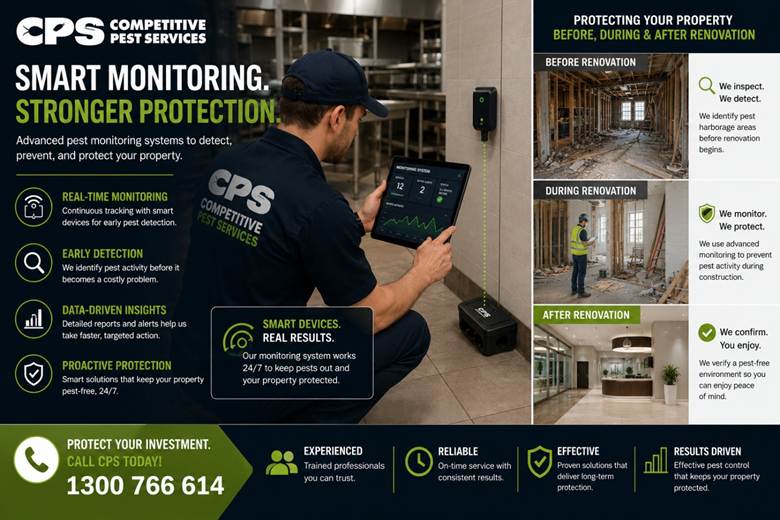
Arrange a professional pre-renovation pest inspection with Competitive Pest Control before demolition begins.
Professional pest management before, during, and after renovation work can help reduce hidden risks, prevent infestations from spreading, and protect your property throughout the project.
We acknowledge the Traditional Custodians of Country throughout Australia and their connections to land, sea, and community.
We pay our respect to their Elders past and present and extend that respect to all Aboriginal and Torres Strait Islander peoples today.