Send us a message and one of our specialists pest managers will be in touch
Why Do Mosquitoes Bite Some People More Than Others?
September 24, 2026
Have you ever noticed that mosquitoes seem to bite you more than everyone else? While your friends enjoy an evening outdoors without a problem, you may end up covered in itchy bites. Many people believe mosquitoes have favourite people, but there is actually some science behind this idea. Mosquitoes do not choose people at random. […]
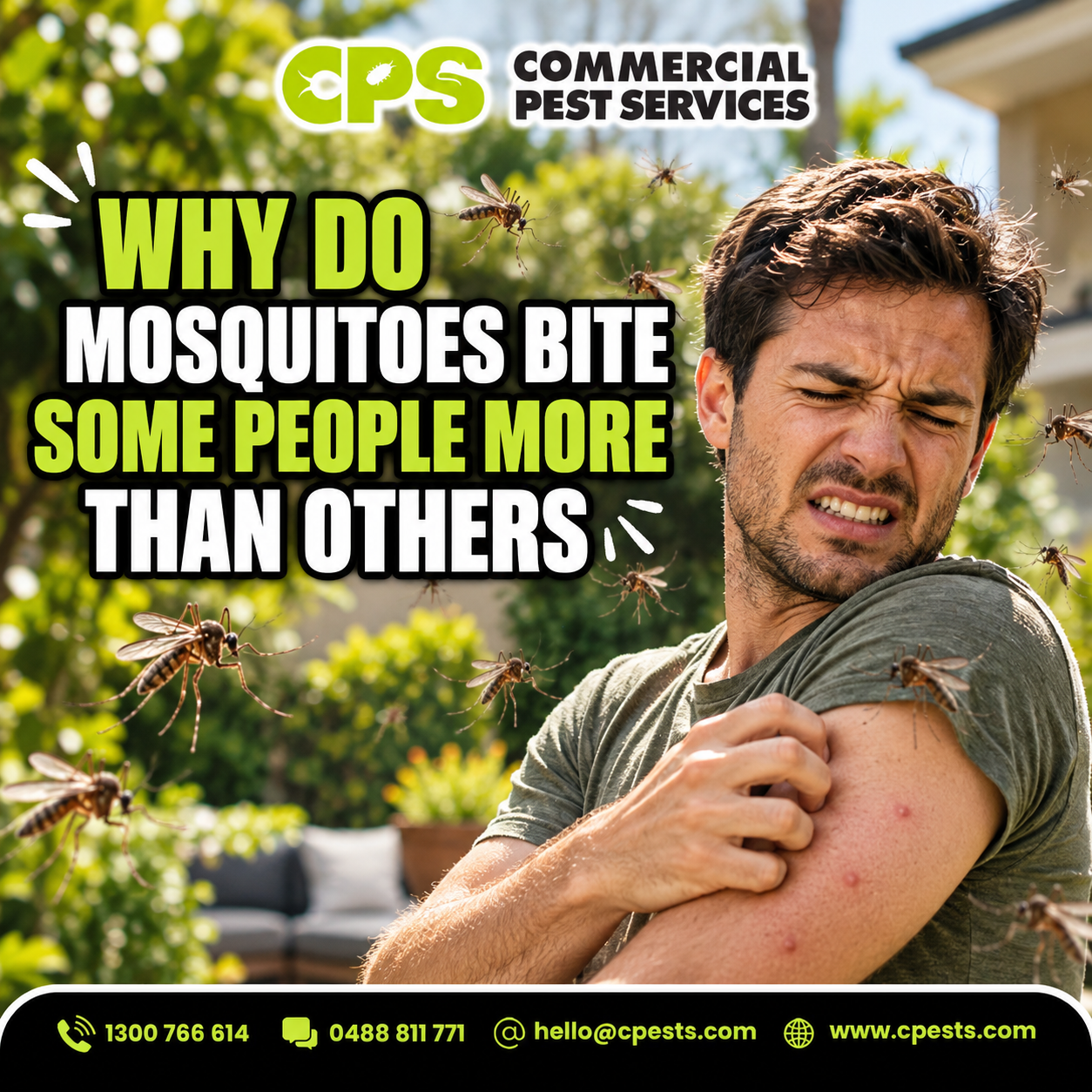
Have you ever noticed that mosquitoes seem to bite you more than everyone else? While your friends enjoy an evening outdoors without a problem, you may end up covered in itchy bites. Many people believe mosquitoes have favourite people, but there is actually some science behind this idea.
Mosquitoes do not choose people at random. Instead, they respond to several factors, including the air we breathe, our body heat and even our natural body odour. Although you cannot control every factor, understanding what attracts mosquitoes can help you reduce your chances of being bitten.
What Attracts Mosquitoes?
Mosquitoes rely on their senses to find people. They can detect changes in the air and identify potential hosts from surprisingly long distances.
One of the biggest attractants is carbon dioxide. Every time you breathe out, you release carbon dioxide into the air. Mosquitoes use this gas to help locate people, which is why they often become more active when groups gather outdoors.
Body heat also plays a role. Mosquitoes are naturally attracted to warm bodies, especially during warmer months when they are already highly active.
In addition, your skin produces natural scents through sweat and harmless skin bacteria. These scents vary from person to person, which may explain why some individuals receive more bites than others.
Other Factors That May Influence Mosquito Bites
Several everyday factors may also increase your chances of attracting mosquitoes.
Spending More Time Outdoors
The longer you stay outside, especially around dawn and dusk, the greater your chance of encountering mosquitoes. Gardens, parks and areas near standing water often have higher mosquito activity.
Wearing Dark-Coloured Clothing
Mosquitoes use their eyesight as well as their sense of smell. Dark colours such as black, navy and dark green are easier for them to see, particularly in low light.
Choosing lighter-coloured clothing may make you less noticeable when spending time outdoors.
Physical Activity
Exercise and outdoor activities increase your body temperature and cause you to breathe more heavily. You also produce more sweat, which releases additional scents that mosquitoes can detect.
For this reason, people who have recently exercised may notice more mosquito bites.
Pregnancy
Research has shown that pregnant women may receive more mosquito bites than others. This is partly because pregnancy increases body temperature and carbon dioxide production, making mosquitoes more likely to detect them.
Genetics
Some studies suggest that genetics may also influence how attractive a person is to mosquitoes. However, scientists continue to study this area, and no single factor fully explains why one person gets bitten more often than another.
Instead, several factors usually work together.
How to Reduce Mosquito Bites
Although you cannot change how mosquitoes detect you, you can reduce your exposure.
Apply an appropriate insect repellent when spending time outdoors, especially during dawn and dusk when mosquitoes are most active. Wear long sleeves, long trousers and lighter-coloured clothing where practical.
Around your home, remove standing water from buckets, pot plant trays and other containers where mosquitoes can breed. Clean gutters regularly and repair damaged flyscreens to help keep mosquitoes outside.
These simple habits can significantly reduce mosquito activity around your property.
Prevention Starts at Home
Some people naturally attract more mosquitoes than others, but that does not mean mosquito bites are unavoidable.
By understanding what attracts mosquitoes and removing breeding conditions around your home, you can lower your risk of bites throughout the year. If mosquito activity remains high despite your efforts, a professional pest inspection can identify environmental conditions that encourage mosquitoes and recommend practical long-term solutions for a safer, more comfortable outdoor space.
We are committed to providing services that are effective, transparent, and easy to understand.
Book an inspection now with CPS today to arrange a professional inspection and tailored treatment plan.
We acknowledge the Traditional Custodians of Country throughout Australia and their connections to land, sea, and community.
We pay our respect to their Elders past and present and extend that respect to all Aboriginal and Torres Strait Islander peoples today.