Send us a message and one of our specialists pest managers will be in touch
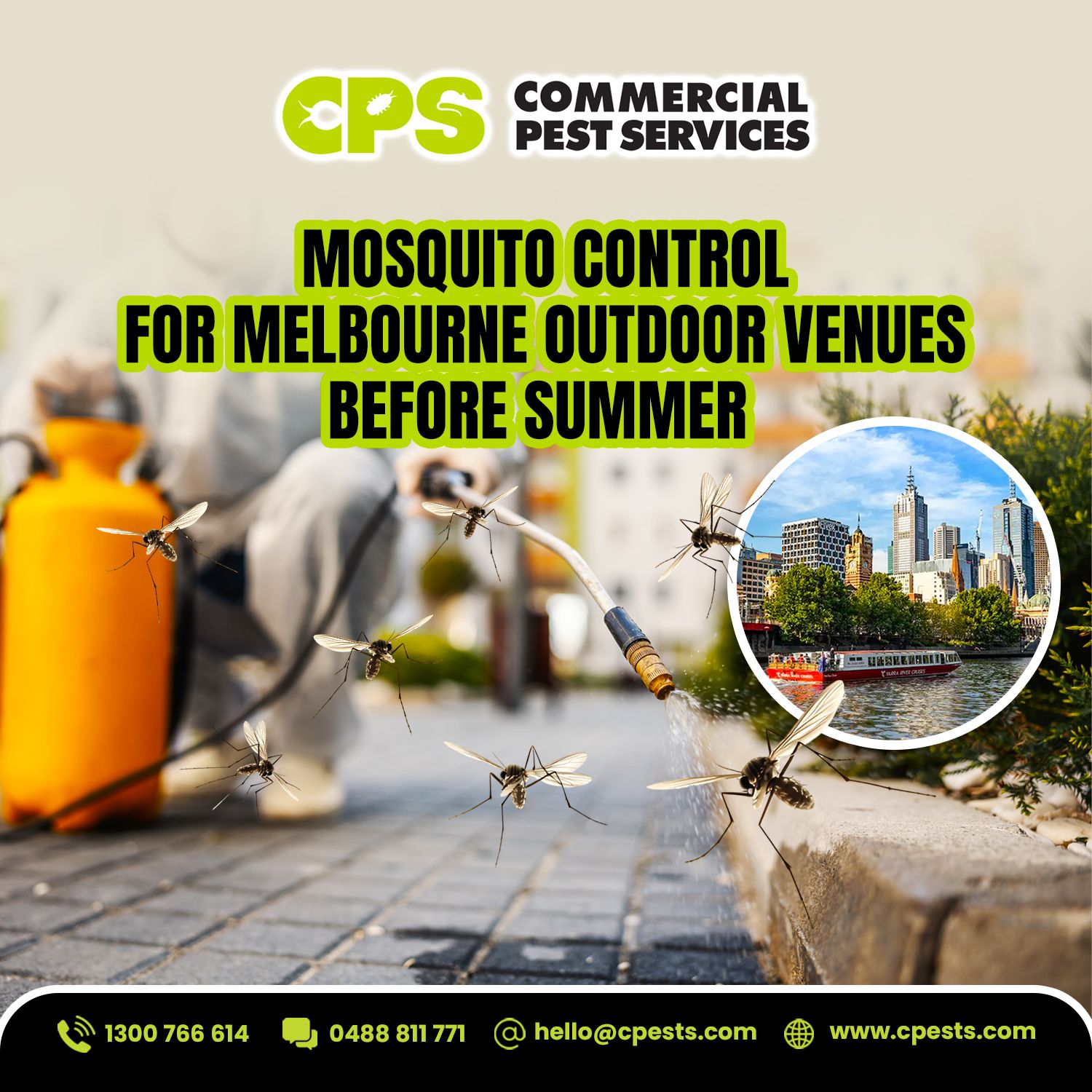
Mosquito Control for Melbourne Outdoor Venues Before Summer
May 27, 2026
There’s a moment every outdoor venue manager knows well. The food is plated, the fairy lights are on, the first guests are settling in, and then someone swats at the air. Then another person. Then a table near the garden starts pulling out phone torches. By the time the complaints start, the damage to your evening is already done. Mosquitoes aren’t just an […]
There’s a moment every outdoor venue manager knows well. The food is plated, the fairy lights are on, the first guests are settling in, and then someone swats at the air. Then another person. Then a table near the garden starts pulling out phone torches. By the time the complaints start, the damage to your evening is already done.
Mosquitoes aren’t just an annoyance. For outdoor dining venues, rooftop bars, wedding gardens, and event spaces, they’re a reputation risk that compounds every warm night. The good news is that May, right now, is the best window to sort it. Here’s what you need to know.
Breeding cycle as fast as 7–10 days
Guest complaints up 60% in outdoor dining in the summer
Ross River virus still active in VIC & QLD in autumn
Why Mosquito Control Matters Before Summer
Protect guest comfort and satisfaction
A mosquito-free venue isn’t a luxury, it’s an expectation. In a competitive Melbourne hospitality market, guests will not return to a venue where they spent the evening being bitten, regardless of how good the food was. Online reviews are particularly unforgiving on this point: a single comment mentioning mosquitoes can affect booking decisions for months. Getting ahead of the problem in May means your summer season opens on the front foot.
Reduce complaints at outdoor dining and event areas
The peak of mosquito activity in Melbourne typically runs from late November through to March, with populations building throughout spring. However, the mosquitoes causing problems at your summer events were breeding in the weeks before the season began, in the pot saucers, ornamental ponds, clogged gutters, and shaded drains that didn’t get attention over autumn. Treating the environment in May is what prevents the spike in November.
Stay ahead of peak mosquito activity
This is the key timing insight: mosquitoes complete their breeding cycle in as little as seven to ten days under warm conditions. By the time you can see and hear the problem, the population has already established. Pre-season treatment in May disrupts the early breeding cycle, reducing the baseline population that summer warmth would otherwise amplify. It is always faster and cheaper to treat before a peak than to react during one.
Common Mosquito Hotspots at Outdoor Venues
Mosquitoes need still water to breed. That’s the fundamental rule, and in an outdoor venue environment, still water is everywhere if you know where to look. The table below maps the most common breeding locations at Melbourne hospitality and event venues, explains why each one is a risk, and gives you a quick action for each.
Hotspot Area
Why It Breeds There
Quick Action
Ornamental ponds and water features
Still water + algae growth = perfect larval habitat
Install pump circulation or treat with BTi larvicide
Planter bases and pot saucers
Collects rainwater unnoticed, shaded from evaporation
Drill drainage holes or tip saucers after rain
Flat roof and guttering
Pooling water after rain lasts 3–5 days — enough for larvae
Clear gutters monthly; install gutter guards before summer
Shaded garden beds and dense hedges
Cool, humid microclimate ideal for adult resting
Trim back to reduce canopy cover and improve airflow
Event floor drainage sumps
Organic residue in drains slows water movement
Flush drains weekly with an enzymatic cleaner
Bin bays and waste areas
Condensation inside bins, pooling at base
Keep bin lids sealed; clean bin bays fortnightly
The most important thing to know is that mosquitoes don’t need a pond. They can complete their breeding cycle in as little as a tablespoon of water. A pot saucer, the base of a torch stand, a blocked gutter section, or the lip of an outdoor bin that doesn’t drain, each of these is a viable breeding site that you can walk past every day without noticing.
How Mosquitoes Affect Guest Experience
Beyond the obvious discomfort, mosquito presence at events and outdoor dining venues affects the business in specific, measurable ways.
Outdoor dining bookings in Melbourne’s inner suburbs are particularly competitive. Guests who choose an alfresco table are making an active choice, they want the experience to be pleasant. When it isn’t, they won’t just leave quietly. Studies of hospitality review platforms consistently show that pest-related complaints carry disproportionate weight; a single vivid description of a mosquito-plagued dinner can be read thousands of times.
For event venues, weddings, corporate functions, private hire, the stakes are even higher. Guests are dressed formally, often in warm-weather attire, in a seated environment. Mosquito activity during a seated dinner function isn’t just uncomfortable; it becomes the story people tell about the event for years.
Signs Your Venue May Need Mosquito Treatment
Not every venue operator will notice mosquito pressure until it’s already a problem at the table level. Here are the earlier signs to watch for:
Standing water that persists for more than three days after rain in any low-drainage area on the property
Mosquito larvae (thin, wriggling comma-shaped creatures) visible in ornamental water features or drainage sumps, look in the early morning when they’re closest to the surface
Staff reporting bites during setup, particularly in shaded areas or near the garden perimeter
Guests requesting to move tables away from garden beds or water features
Visible adult mosquitoes resting on the underside of leaves in shaded vegetation at the property boundary
Any one of these is worth taking seriously. Two or more, and a professional assessment before summer is not optional, it’s necessary.
Pre-Summer Prevention Steps for Melbourne Venues
Remove standing water weekly
Every outdoor venue should have a standing-water audit on the weekly maintenance schedule. This means physically checking: ornamental planters and their saucers, outdoor bar and kitchen drainage sumps, the bases of any decorative or structural water features, low-lying areas in the garden after rain, and the internal surface of any drainage pits or collection chambers. Tipping, draining, or treating these takes minutes, and it removes breeding habitat before larvae can develop.
Trim overgrown plants and shrubs
Adult mosquitoes rest in shaded, humid vegetation during the day, the same garden beds, feature hedges, and perimeter plantings that your venue invested in for atmosphere. Regular trimming to maintain airflow through dense plantings reduces the adult mosquito resting habitat. Particular attention should go to vegetation adjacent to the guest seating area and along any fence line that borders a park or reserve.
Check drainage and guttering
Rooftop bars and multi-level venues have a particularly high-risk area in their guttering. A blocked gutter section that holds water for five days is a functional mosquito breeding site directly above your guest area. Clear gutters before summer, install leaf guards where practical, and confirm that all drainage from outdoor bar service areas flows freely. A drain that pools because of slow flow or a partial blockage will breed mosquitoes reliably throughout the warmer months.
Use fans or barriers in seating areas
Mosquitoes are weak fliers. A modest airflow from ceiling fans, oscillating pedestal fans, or strategic placement of outdoor heating fans in the event space significantly reduces the mosquito presence at the table level. Positioning fans to create a gentle cross-breeze across the primary guest seating area is a simple, cost-effective layer of protection that works in combination with treatment.
Professional Mosquito Control for Venues
Venue-scale mosquito management goes beyond what a team member can address with a consumer product on a Saturday morning. A professional program has three components that consumer approaches can’t replicate.
First, larviciding, the treatment of identified breeding sites with Bacillus thuringiensis israelensis (BTi), a naturally occurring bacterium that kills mosquito larvae without harming people, pets, fish, or other insects. Applied to water features, drainage areas, and any standing water that can’t be eliminated, BTi breaks the breeding cycle at the source.
Second, residual adult treatment, applied to the foliage, fences, and sheltered surfaces where adult mosquitoes rest during the day. Low-toxicity residual products remain active for several weeks, reducing the adult population in the venue environment through the peak activity period.
Third, the breeding site audit, systematic walk of the entire venue, including roof access for gutter inspection, to identify and document every viable breeding site. This is what turns a reactive spray into a program with results that hold. CPS provides a written site audit report after every venue visit, formatted for your records.
When to schedule mosquito treatment
For Melbourne outdoor venues, the ideal treatment window is May and early June, before temperatures drop enough to slow mosquito development but far enough ahead of summer that the program is established before peak season. A scheduled pre-summer treatment in May, with a review visit in October before the season opens, is the structure CPS recommends for most venue sizes.
Book a Free Venue Mosquito Assessment
Let a CPS technician walk your venue, identify every breeding hotspot, and give you a written treatment plan before your summer season begins.
We acknowledge the Traditional Custodians of Country throughout Australia and their connections to land, sea, and community.
We pay our respect to their Elders past and present and extend that respect to all Aboriginal and Torres Strait Islander peoples today.