Send us a message and one of our specialists pest managers will be in touch
All About Crickets in Australia: What Do We Know?
August 3, 2026
In Australia, cricket activity often increases during warmer months. Crickets may not spread diseases like some other household pests. However, larger numbers around your property can become a nuisance.
Crickets may not spread diseases like some other household pests. However, that does not mean they are always welcome guests.
Their constant chirping, especially during the evening, can quickly become frustrating. In addition, seeing crickets jumping around your home or garden can be unsettling for many homeowners.
In Australia, cricket activity often increases during warmer months. While a few crickets outdoors may not seem concerning, larger numbers around your property can become a nuisance.
Understanding these insects can help you know when simple prevention measures are enough and when professional cricket control may be beneficial.
House Cricket vs Field Cricket: What’s the Difference?
Two of the most common cricket species found around Australian properties are house crickets and black field crickets.
House Crickets
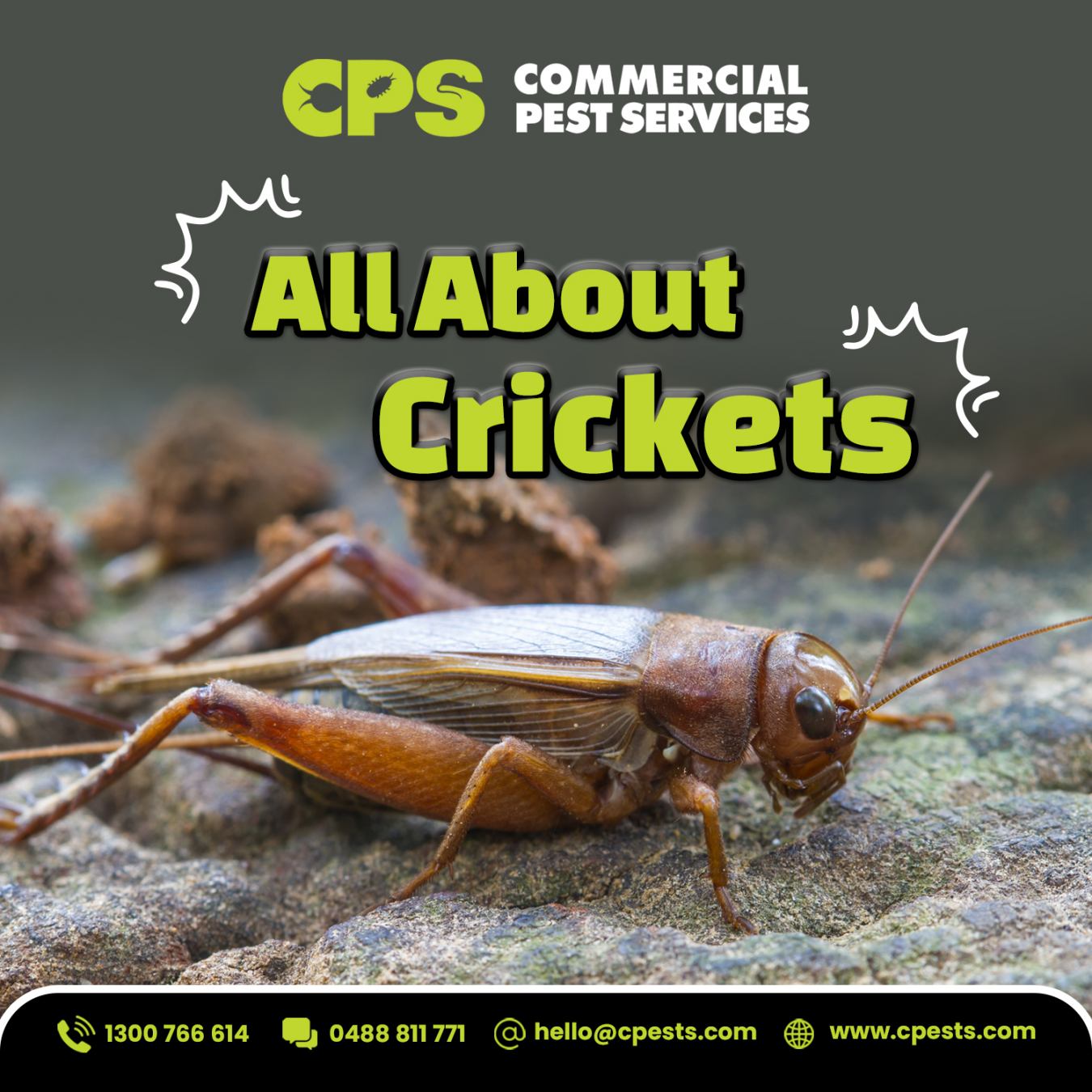
House crickets are usually light yellow or brown in colour. They often have dark bands across their heads and typically grow to less than three centimetres in length.
As their name suggests, house crickets are more likely to enter homes and buildings. They are attracted to warmth, shelter, and light sources, and may come inside during winter when conditions outside become very cold.
Their chirping tends to be continuous and high-pitched, especially at night.
Field Crickets and Mole Crickets
Field crickets are generally darker in appearance as adults. They are often black or dark brown, usually larger than house crickets, with a stout body and strong hind legs. Young field crickets are nymphs and may show a pale band around the middle before wings fully develop.
These crickets prefer outdoor environments such as lawns, gardens, and landscaped areas, often sheltering in loose soil near the surface. However, they may occasionally move indoors when conditions become favourable.
Their chirping is often deeper and louder than that of house crickets.
Although these species behave differently, both can become a nuisance when populations increase around homes.
Fun Facts About Crickets
Crickets are fascinating insects, and many homeowners have questions about them.
Can crickets fly?
Some cricket species have wings and can fly short distances. However, most rely on strong hind legs for jumping as their primary form of movement, much like grasshoppers.
Why do crickets chirp?
Male crickets chirp by rubbing their wings together, and males use this call to attract mates and communicate with other crickets. This chirping creates a sound that is often heard more easily than the insects are seen, and some species have ears on their forelegs to detect vibrations. This mating communication is often most noticeable from dusk onward.
Are crickets dangerous?
Crickets do not usually pose direct health risks to humans because they are not known for spreading diseases. They are often eaten by natural predators such as birds and frogs.
Why are crickets more active at night?
Crickets are mainly nocturnal insects. Therefore, their activity and chirping often become more noticeable after sunset, when crickets feed after dark and are often most active on warm evenings, especially in spring and late summer.
Can crickets damage property?
Although uncommon, crickets may feed on fabrics, paper products, and natural fibres when food sources are limited, though their diet can also include plants, seeds, seedlings, grasses, and roots depending on the species. This is one reason some crickets are treated as pests in gardens and the lawn.
How Does Professional Cricket Treatment Work?
When cricket activity becomes difficult to manage, professional pest management can help reduce populations and provide longer-lasting protection.
At Competitive Pest Services (CPS), our technicians begin with a thorough inspection to identify the extent of cricket activity and potential harbourage areas. They also check surrounding soil and garden conditions that may support cricket activity.
Treatment strategies target both active crickets and the conditions that support them. This may include treating entry points, external areas, and locations where crickets shelter during the day.
Because every property is different, our specialists tailor solutions to suit the environment and level of activity. We also provide practical recommendations that support long-term prevention.
As with all our pest management services, we focus on safety, effectiveness, and minimising unnecessary chemical use.
Crickets are a natural part of Australia’s environment, but activity around the home or garden may increase after rain during summer. However, their noise and increasing presence can quickly become frustrating when they move too close to home.
Because cricket activity often peaks during summer, prevention and early intervention can help reduce future nuisance, including issues with mole crickets around outdoor areas. At CPS, we provide tailored cricket control solutions designed to protect your comfort and peace of mind.
Whether you are dealing with a few unwelcome visitors or a larger cricket problem, our experienced team is here to help.
Because effective pest management is not just about removing pests. It is about helping you enjoy your home all year round.
We are committed to providing services that are effective, transparent, and easy to understand.
Book an inspection now with CPS today to arrange a professional inspection and tailored treatment plan.
We acknowledge the Traditional Custodians of Country throughout Australia and their connections to land, sea, and community.
We pay our respect to their Elders past and present and extend that respect to all Aboriginal and Torres Strait Islander peoples today.