Send us a message and one of our specialists pest managers will be in touch
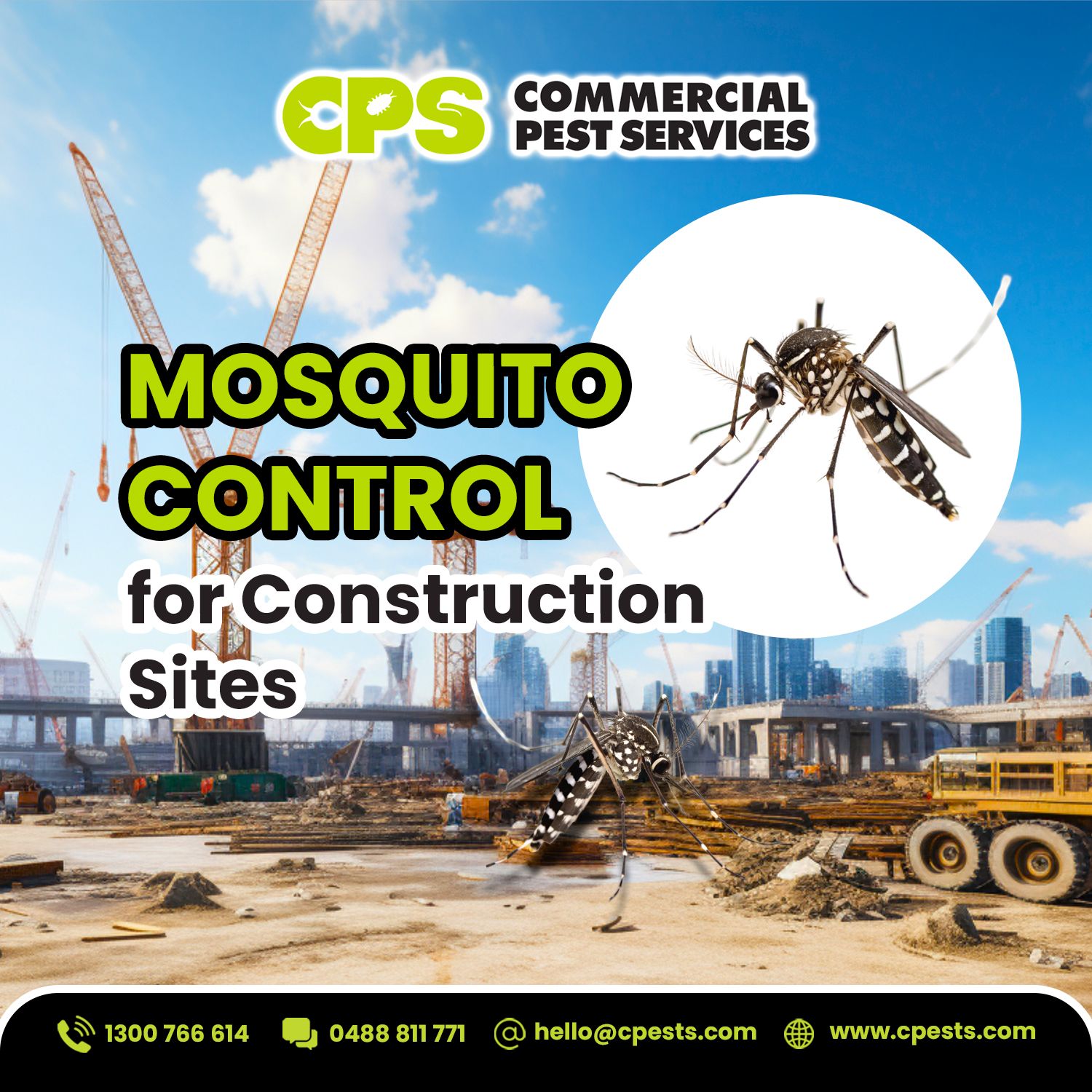
Mosquito Control for Construction Sites
June 13, 2026
Construction sites are one of the most overlooked environments for mosquito activity. Between exposed structures, temporary drainage issues, and stored materials, many worksites unintentionally create ideal breeding conditions for mosquitoes. The problem is not just a seasonal nuisance. Poor mosquito management on construction sites can affect worker comfort, productivity, safety, and relationships with nearby residents or neighbouring businesses. In some areas, […]
Construction sites are one of the most overlooked environments for mosquito activity. Between exposed structures, temporary drainage issues, and stored materials, many worksites unintentionally create ideal breeding conditions for mosquitoes.
The problem is not just a seasonal nuisance. Poor mosquito management on construction sites can affect worker comfort, productivity, safety, and relationships with nearby residents or neighbouring businesses. In some areas, mosquito activity may also increase health risks associated with mosquito-borne diseases.
For builders, site managers, and contractors, mosquito control should be viewed as part of practical site management rather than a reactive pest issue. Effective prevention supports site hygiene, worker wellbeing, and smoother project operations throughout the construction process.
Why Construction Sites Attract Mosquitoes
Mosquitoes only need a small amount of standing water to breed. Naturally, Construction sites create many temporary water-holding areas, especially during active building stages or after storms.
Rainwater commonly collects inside trenches, lift wells, concrete slabs, uncovered containers, and unfinished structural areas. Waste materials such as tyres, buckets, drums, tarps, and discarded building debris can also trap water for extended periods without being noticed.
Unlike finished buildings, construction sites often contain large open areas with inconsistent drainage and limited environmental control. Consequently, these exposed conditions provide both moisture and shelter that support mosquito breeding cycles.
The issue becomes even more noticeable during warmer months in Australia or in regions with regular rainfall.
Therefore, without regular monitoring, mosquito populations can increase rapidly across the site.
Where to Look First
One of the biggest challenges with mosquito control is that breeding areas are often hidden in places workers may not inspect regularly.
Ground-Level Breeding Points
The first areas to inspect are ground-level water collection points.
This includes puddles, blocked drains, potholes, ditches, trenches, and unused containers holding stagnant water. Wheelbarrows, buckets, drums, tyres, cans, and discarded materials are particularly common mosquito breeding sources because they trap rainwater easily.
Even small water accumulations can support mosquito larvae development within a short period.
With that being said, site waste management plays a major role here. Construction debris left exposed across the site increases the number of potential breeding locations after rain.
Upper Floors and Structures
Mosquito breeding does not only occur at ground level.
Upper floors of unfinished buildings can also collect standing water in rooftop, concrete floor puddles, safety barriers, and partially completed structures.
Lift wells, scaffold cavities, pole openings, and exposed structural gaps often hold rainwater for long periods if inspections are inconsistent.
These elevated breeding areas are frequently missed during routine site walkthroughs, allowing mosquito activity to continue unnoticed.
Weekly Inspection Routine
The most effective mosquito control programs rely on regular inspection rather than occasional reactive treatment.
Construction sites should ideally be inspected at least once per week for standing water and potential breeding areas. Additional inspections are especially important after heavy rainfall as water can reappear quickly across unfinished sections of the site.
A proper inspection should cover:
Ground-level drainage areas
Stored materials and containers
Roof and upper-level structures
When breeding areas are identified, workers should report them to the site supervisor immediately so the water can either be removed or treated before mosquito populations develop further.
Consistent inspections are one of the most important parts of long-term mosquito prevention.
Treatment Options
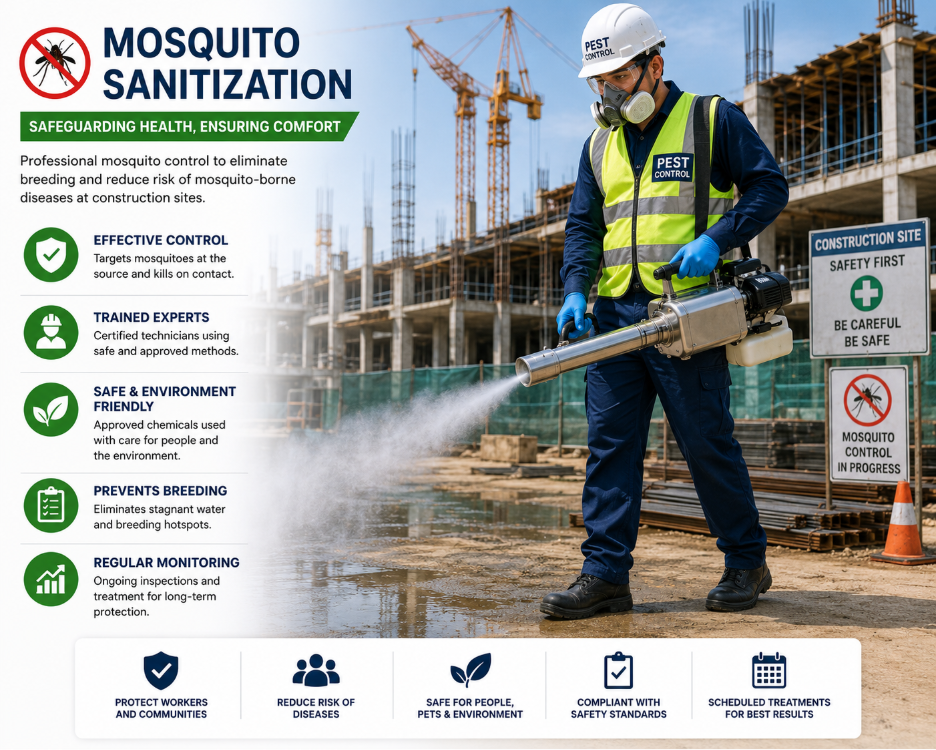
While prevention and water removal are the primary solutions, some sites may still require targeted mosquito treatments.
Approved larvicides or insecticides may be applied to stagnant water that cannot be removed safely or practically. Mosquito dunks or similar larval control products are commonly used in areas where ongoing water accumulation is unavoidable.
However, fogging should not be viewed as the main mosquito solution for construction sites.
Although fogging can temporarily reduce adult mosquito activity during outbreaks, it does not eliminate the breeding sources causing the problem. Without source reduction, mosquito populations usually return quickly.
In some situations, residual spraying may also be applied around sheltered site offices or enclosed workspaces where mosquito activity remains persistent.
The most effective treatment programs combine targeted control with ongoing water management and monitoring.
Why Mosquito Control Matters for Projects
Poor mosquito management can create wider operational problems for construction projects.
High mosquito activity may affect worker comfort, concentration, and morale, especially on large outdoor projects operating across warmer seasons.
Neighbouring residents or businesses may also raise complaints if mosquito activity spreads beyond the construction site boundary.
In higher-risk areas, projects may require stronger surveillance systems or formal mosquito management contracts to maintain compliance and reduce ongoing risks.
Preventive mosquito control helps projects operate more smoothly while reducing disruption and reputational concerns.
The best mosquito control strategy for construction sites is not fogging alone.
Long-term prevention depends on consistent weekly inspections, standing-water removal, proper site housekeeping, and targeted treatment where necessary.
For builders and site managers, proactive mosquito control is part of responsible site management. Early action helps reduce nuisance activity, improve worker comfort, and minimise the risk of larger breeding problems developing across the project.
Mosquito breeding can escalate quickly on active construction sites, especially after rainfall or poor drainage conditions.
Schedule regular mosquito inspections and preventive treatments before breeding activity spreads across the site.
Good water management not only reduces mosquito pressure but also supports worker safety, project efficiency, and cleaner site operations throughout the build.
Contact CPS today to arrange a professional inspection and tailored treatment plan.
We acknowledge the Traditional Custodians of Country throughout Australia and their connections to land, sea, and community.
We pay our respect to their Elders past and present and extend that respect to all Aboriginal and Torres Strait Islander peoples today.