Send us a message and one of our specialists pest managers will be in touch
Misconceptions about Disinfection
June 29, 2026
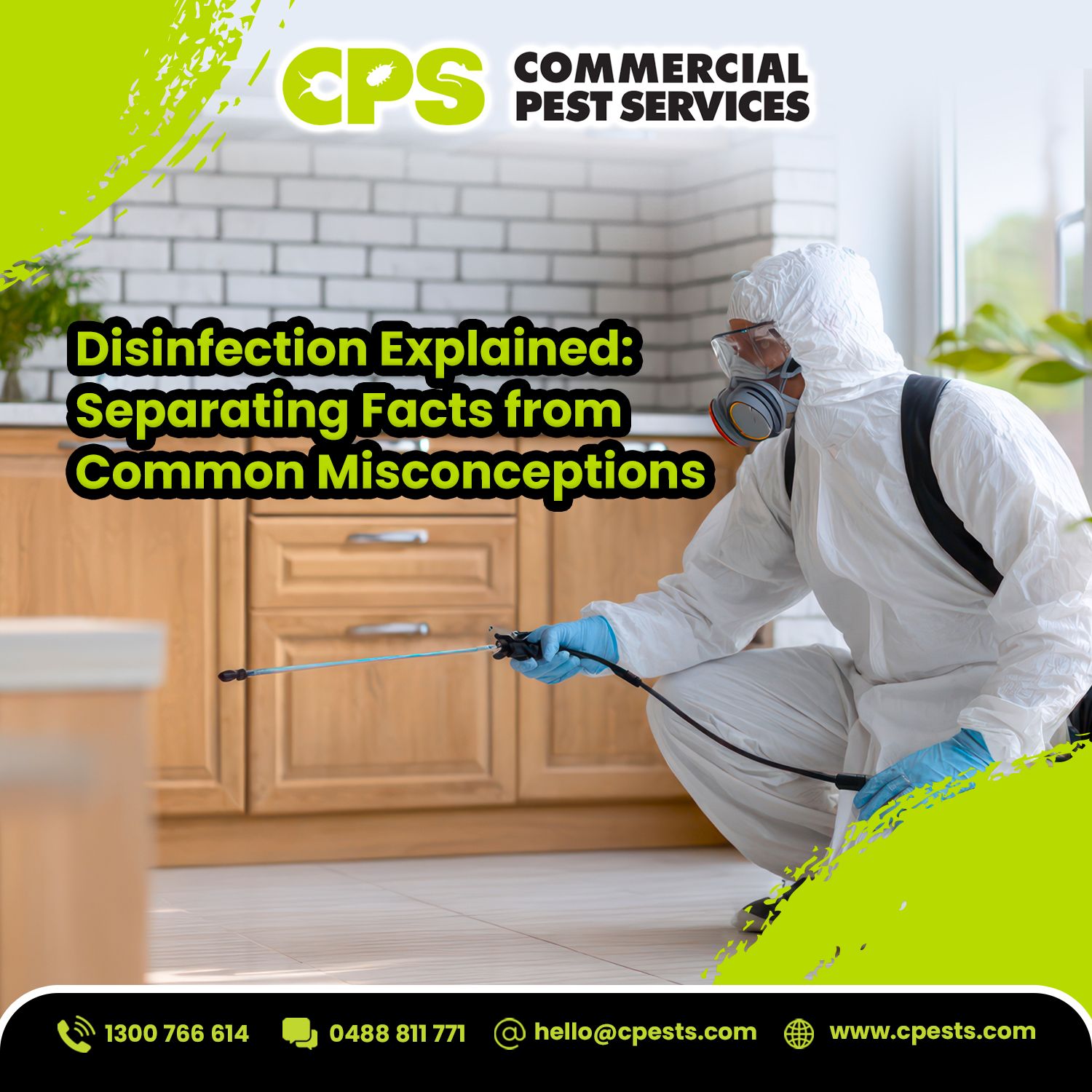
Disinfection Explained: Separating Facts from Common Misconceptions Disinfection has become a familiar term in homes, workplaces, schools, and public facilities. However, many people still misunderstand what disinfection actually does and when it is necessary. As a result, important hygiene practices are sometimes overlooked or applied incorrectly. One of the most common misconceptions about disinfection is that […]
Disinfection Explained: Separating Facts from Common Misconceptions
Disinfection has become a familiar term in homes, workplaces, schools, and public facilities.
However, many people still misunderstand what disinfection actually does and when it is necessary. As a result, important hygiene practices are sometimes overlooked or applied incorrectly.
One of the most common misconceptions about disinfection is that it simply means cleaning. While cleaning and disinfection often work together, they serve different purposes. Therefore, understanding the role of disinfection can help create healthier environments and improve overall hygiene management.
What Is Disinfection?
Disinfection is the process of reducing or eliminating harmful microorganisms from surfaces and high-touch areas.
Unlike cleaning, which focuses on removing visible dirt and debris, disinfection targets bacteria, viruses, and other microorganisms that may remain after cleaning.
Although a surface may appear spotless, harmful microorganisms can still be present. Consequently, visual cleanliness does not always indicate a hygienic environment. This distinction explains why disinfection remains an important part of workplace hygiene, food safety, and public health practices.
Misconception #1: Cleaning and Disinfection Are the Same Thing
Many people use the terms cleaning and disinfection interchangeably. However, these processes achieve different outcomes and should not be viewed as identical tasks. While cleaning improves appearance, disinfection focuses on reducing microorganisms that may affect health.
For example, a desk, countertop, or door handle may look perfectly clean after wiping. Nevertheless, microorganisms can still remain on the surface. Therefore, relying solely on appearance may create a false sense of security.
Effective hygiene programs often include both cleaning and disinfection because each process contributes to a healthier environment. Together, they help reduce contamination risks in homes, workplaces, and shared facilities.
[internal link – ‘Difference between Cleaning, Sanitizing, and Disinfection’]
Misconception #2: If It Looks Clean, It Must Be Safe
A clean appearance often leads people to assume a surface is free from harmful microorganisms. Unfortunately, bacteria and viruses are invisible to the naked eye. As a result, visual inspections alone cannot determine whether a surface requires disinfection.
High-touch surfaces deserve particular attention because multiple people interact with them throughout the day. Common examples include lift buttons, light switches, desks, handrails, and shared equipment. Consequently, these areas may benefit from regular disinfection even when they appear clean.
Understanding this misconception helps people make more informed decisions about hygiene and environmental health. Furthermore, it highlights the importance of consistent disinfection practices in busy environments.
Misconception #3: Disinfection Is Only Necessary During Disease Outbreaks
Many people associate disinfection with disease outbreaks, seasonal illnesses, or public health emergencies. Although disinfection becomes especially important during these situations, its value extends well beyond temporary events.
Routine disinfection supports hygiene throughout the year in schools, offices, healthcare facilities, hospitality venues, and food businesses. In addition, regular disinfection can contribute to healthier shared spaces where people work, learn, and interact daily.
Rather than treating disinfection as an emergency response, organisations often view it as part of a broader hygiene management strategy. Consequently, they can maintain higher standards of cleanliness and public health over time.
Misconception #4: More Disinfectant Means Better Results
Another common misconception involves the amount of disinfectant used. Some people assume that applying larger quantities automatically improves effectiveness. However, proper application techniques often matter more than excessive product use.
Disinfectants require sufficient contact time to work effectively. Furthermore, manufacturers provide instructions that help ensure the product performs as intended. Ignoring these recommendations may reduce effectiveness rather than improve results.
For this reason, professional disinfection services focus on correct procedures, suitable products, and targeted application methods. As a result, businesses and property managers can achieve more reliable outcomes.
Why Is Disinfection Important?
Disinfection plays an important role in supporting public health and environmental hygiene. By reducing harmful microorganisms on frequently touched surfaces, it helps minimise contamination risks in shared environments. Therefore, many organisations include routine disinfection within their hygiene programs.
Workplace disinfection also contributes to healthier environments for employees, visitors, and customers. Similarly, schools and childcare facilities use disinfection practices to support student wellbeing. Consequently, disinfection remains relevant across a wide range of industries and settings.
Food safety provides another important reason for regular disinfection. In food preparation and handling environments, maintaining hygienic surfaces helps support quality standards and reduce contamination risks.
Healthcare facilities often require enhanced disinfection practices due to their sensitive environments. Meanwhile, hospitality venues, food processing facilities, and retail spaces rely on disinfection to support hygiene, customer confidence, and operational standards.
Residential properties may also benefit from professional disinfection following illness, contamination events, or periods of increased health concerns.
Therefore, disinfection can support both commercial and residential hygiene needs.
Misconceptions about disinfection often lead people to underestimate its importance. While surfaces may appear clean, appearance alone cannot confirm whether harmful microorganisms are present. Therefore, disinfection remains an important component of effective hygiene management.
By understanding what disinfection does and when it is necessary, homeowners and businesses can make better decisions about environmental hygiene. Furthermore, routine disinfection supports public health, food safety, and workplace wellbeing across many different settings.
Whether managing a commercial facility, educational institution, food business, or residential property, disinfection helps create cleaner, healthier, and safer environments for everyone.
We acknowledge the Traditional Custodians of Country throughout Australia and their connections to land, sea, and community.
We pay our respect to their Elders past and present and extend that respect to all Aboriginal and Torres Strait Islander peoples today.