Send us a message and one of our specialists pest managers will be in touch
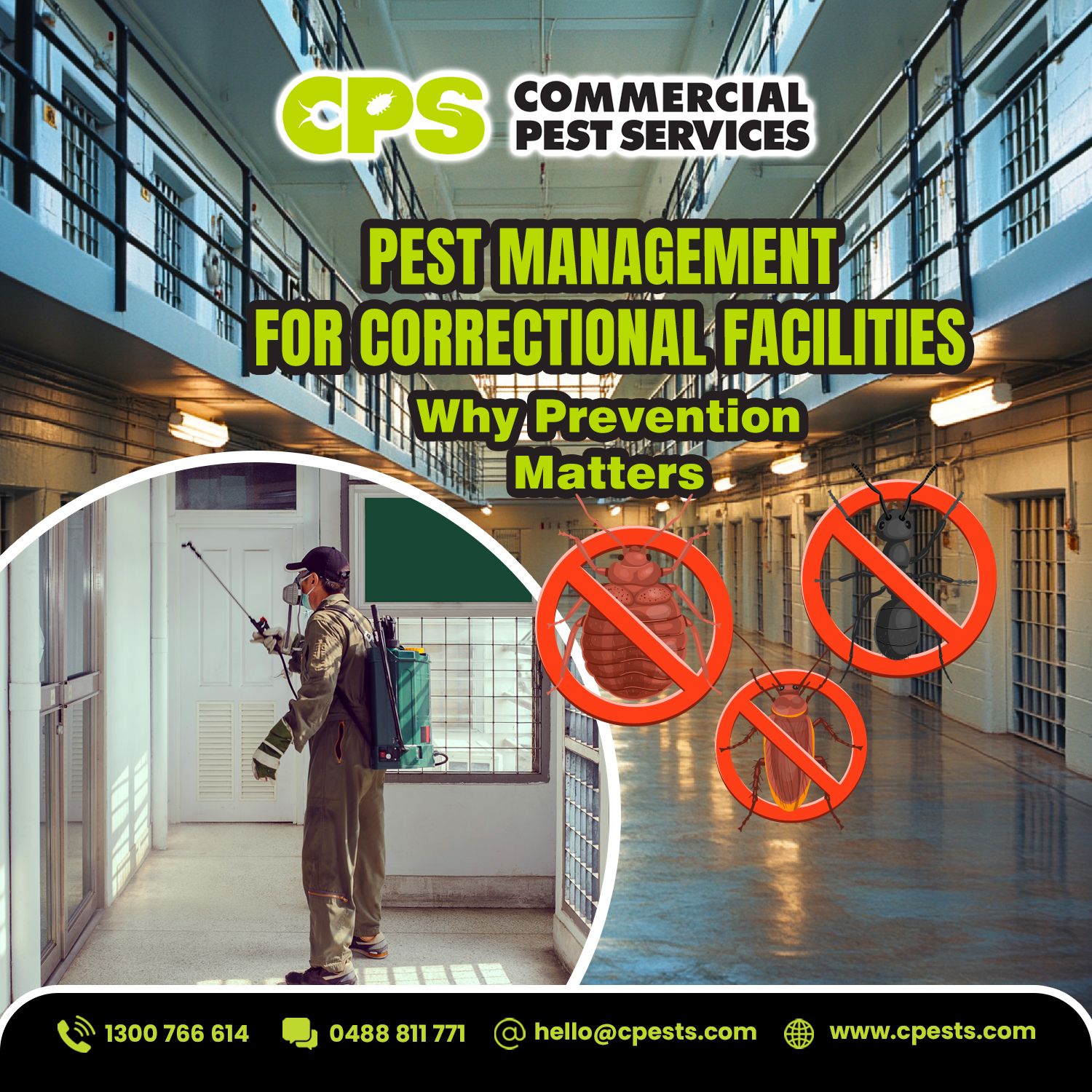
Pest Management for Correctional Facilities: Why Prevention Matters
June 13, 2026
Correctional facilities operate continuously every day, which creates unique sanitation and maintenance challenges. That’s why pest management plays an important role in maintaining hygiene, safety, and operational standards throughout these environments. Unlike many commercial facilities, correctional environments accommodate large numbers of people within shared living spaces, dining areas, recreational zones, and communal facilities. Therefore, pests […]
Correctional facilities operate continuously every day, which creates unique sanitation and maintenance challenges. That’s why pest management plays an important role in maintaining hygiene, safety, and operational standards throughout these environments.
Unlike many commercial facilities, correctional environments accommodate large numbers of people within shared living spaces, dining areas, recreational zones, and communal facilities. Therefore, pests can spread quickly if preventative measures are not consistently maintained.
Additionally, ongoing food preparation, waste generation, moisture, and high daily activity may create suitable conditions for many common pests. Without proper management, small pest issues may rapidly become larger infestations.
Understanding the common pest risks within correctional facilities helps highlight why proactive pest management remains essential.
Why Correctional Facilities Face Higher Pest Risks
Several environmental and operational factors increase pest activity inside correctional facilities.
Shared accommodation areas
High occupancy levels
Large kitchen and dining halls
Connected laundry facilities and plumbing systems
These areas contribute to the increased moisture level, ignored food residues, and uncleaned small areas. This will attract pests such as cockroaches, rodents, and flies if one factor is missed.
Most importantly, these properties operate around the clock, which limits opportunities for complete shutdown cleaning or maintenance.
Common Pests Found in Correctional Facilities
Several pest species commonly appear in high-occupancy environments like correctional facilities.
Cockroaches
Cockroaches often thrive near kitchens, drains, storage rooms, and waste areas. Additionally, they multiply quickly in warm environments with easy access to food and moisture.
Because cockroaches may spread bacteria across surfaces and food preparation areas, they create serious hygiene concerns inside shared facilities.
Rodents
Rats and mice frequently enter buildings searching for food, shelter, and water. They may damage property, contaminate food supplies, and spread bacteria throughout storage areas and communal spaces.
Rodents also reproduce rapidly, which makes early prevention extremely important.
Flies
Flies commonly gather around garbage areas, food preparation zones, drains, and waste disposal points. Furthermore, they may transfer contaminants between waste and dining surfaces.
During warmer seasons, fly activity may increase significantly around correctional facilities.
Bed Bugs
Bed bugs may spread more easily in shared accommodation environments. Although they do not transmit diseases, their bites may cause discomfort, stress, and ongoing sanitation concerns.
Why Pest Infestations Become Serious
Pest problems inside correctional facilities often extend beyond simple nuisance concerns. In many situations, infestations may affect hygiene standards, property conditions, and overall comfort within the environment.
For example, pests may contaminate food preparation areas, dining spaces, storage rooms, and communal facilities. Additionally, rodents and insects may damage property, wiring, insulation, and building materials over time.
Large infestations may also create negative impacts on staff wellbeing, facility maintenance, and operational efficiency. Therefore, early prevention remains far more manageable than reactive treatments after infestations spread.
Because correctional facilities operate continuously, unresolved pest activity may quickly affect multiple areas simultaneously.
Why Preventative Pest Management Matters
Preventative pest management helps facilities identify risks before infestations become difficult to control. Correctional Facilities are challenging venues due to high occupancy, continuous operation, and restricted operating times. Thus preventative pest management is strongly recommended.
Routine monitoring – Identify early early warnings such as droppings, nesting areas, moisture problems and structural gaps.
Sanitation – Regular cleaning, proper food storage, waste management, and moisture control may significantly reduce pest attractants throughout the property.
Scheduled Inspection – Identify entry points around doors, drains, windows, vents, and storage areas.
When it comes to pest management in correctional facilities, there are still some challenges during proactive pest control.
Challenges of Pest Control in Correctional Facilities
Pest management inside correctional facilities requires far more planning and coordination than many other commercial environments. Because these facilities operate continuously, pest control providers often face unique operational and environmental challenges during inspections and treatments.
Restricted Access Areas
Many areas inside correctional facilities have controlled or restricted access for safety and security reasons. Consequently, pest inspections and treatments may require prior approvals, staff coordination, and supervised access before work can begin.
Continuous Occupancy
Unlike offices or retail spaces, correctional facilities remain occupied 24 hours a day. Residents, staff, visitors, kitchen personnel, and maintenance teams continue using the facility throughout the day and night.
Safety Requirements
Safety remains one of the most important considerations during pest management within correctional facilities. Every treatment plan must consider staff safety, resident wellbeing, food preparation standards, and environmental conditions. Additionally, pest professionals may need to follow strict site procedures regarding equipment handling, chemical storage, restricted materials, and movement throughout the facility.
Because multiple people occupy the environment daily, low-risk and carefully controlled treatment strategies often become essential.
Scheduling Around Daily Operations
Correctional facilities operate on highly structured daily schedules that include meals, recreation periods, medical services, cleaning routines, and security procedures. Consequently, pest management activities often require careful scheduling to avoid interfering with these operations.
This level of planning helps facilities maintain operational efficiency while still addressing pest risks effectively.
Additionally, preventative approaches help minimise operational interruptions while supporting cleaner, safer, and more manageable environments throughout the facility.
Correctional facilities face unique pest management challenges because of their continuous operations, shared spaces, and large daily populations. Consequently, preventative pest management remains essential for maintaining hygiene, comfort, and operational standards.
Fortunately, regular inspections, sanitation practices, waste management, and early intervention may greatly reduce pest activity throughout these environments.
When facilities prioritise prevention instead of reactive treatment, they often create safer, cleaner, and more manageable environments for everyone inside.
Contact CPS today to arrange a professional inspection and tailored treatment plan.
We acknowledge the Traditional Custodians of Country throughout Australia and their connections to land, sea, and community.
We pay our respect to their Elders past and present and extend that respect to all Aboriginal and Torres Strait Islander peoples today.